
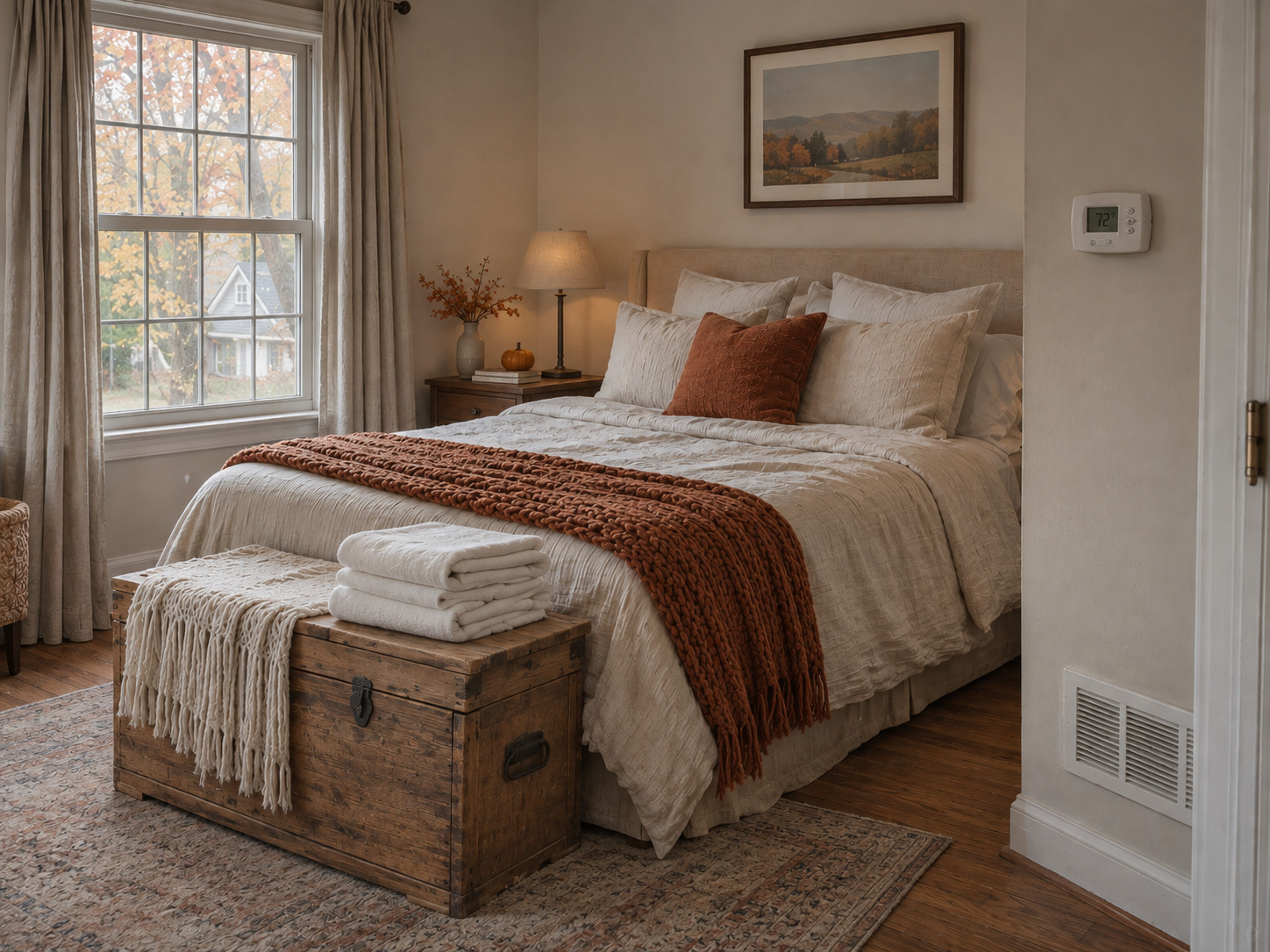

If the rest of the house feels comfortable, turning up the main thermostat may leave everyone else too warm. The better question is why this particular room feels different.
Before your visitors arrive, spend a little time understanding the pattern. Homeowners in Park Ridge and Chicagoland can use those observations to decide whether a layout change or a professional assessment is the next step.
What Can Cause A Cold Guest Room
A cold guest room may involve limited air delivery, an obstructed return path, drafts, insulation differences, or the way the room relates to the thermostat. More than one condition may contribute.
ENERGY STAR’s guidance on uncomfortable rooms recognizes equipment operation, duct problems, and inadequate insulation as possible causes.
That means the room’s temperature is a clue, not proof that the furnace needs replacement. Start with what you can safely observe.
Notice whether the room has always felt colder or whether this is a recent change. The answer helps frame the assessment.
Spend Time In The Room Before Guests Do
Visit the room in the evening and again in the morning. If possible, compare its temperature with another bedroom using the same thermometer.
Record whether the door is open or closed and whether the heating system is running. Also note the weather and thermostat setting.
You are looking for a repeatable pattern, not a perfect measurement. For example, does the room feel acceptable in the afternoon but uncomfortable overnight?
This small check can be more useful than briefly walking in while making the bed. It helps you describe the conditions your guests will actually experience.
Check What The Room Has Been Storing
Guest rooms often do double duty as storage space. A stack of bins, spare furniture, or a folded rug may sit near an air opening for months.
Walk around the room and look for:
- Furniture directly covering a supply register.
- A rug hiding a floor vent.
- Drapes hanging across an air outlet.
- Boxes in front of a return grille.
- A register that someone closed when the room was unused.
Restore clear air paths without opening equipment or altering ductwork. Then observe whether comfort improves during normal operation.
If the change helps only a little, mention that during the service call. It is useful information, even if it does not fully explain the problem.
Notice What Happens When The Door Closes
An overnight guest may close the bedroom door even if your household normally leaves it open. That can make an existing air-path problem more noticeable in some homes.
Carrier’s guide to return air explains the importance of allowing air to circulate back through the system. The return arrangement varies from house to house.
If temperature changes significantly with the door closed, tell the technician. Do not cut the door, add a grille, or modify the wall based on a guess.
The goal is a solution that works with how the room is used, including reasonable privacy for overnight guests.
Look For Drafts And Explain The Room Layout
Check that the windows close and latch properly. Also notice obvious drafts around accessible openings, without removing building materials or disturbing insulation.
A draft deserves investigation, but the feeling alone does not tell you which project is necessary. Explain where you notice it and when it is strongest.
For example, a room above a garage may have different conditions from an interior bedroom. An addition may also have a different heating arrangement.
Our article on older Chicago homes and HVAC challenges discusses why the building matters. Your service team should consider those details before recommending an equipment change.
Ask Whether The Room Receives The Heat It Needs
If the air paths are clear but the room remains cold, ask for an assessment of delivery and building conditions.
ENERGY STAR explains that duct sealing and insulation can help with some comfort problems. However, the appropriate work depends on the actual findings.
Ask how the technician determined the cause. If the recommendation involves ductwork, controls, or insulation, you should understand what each option addresses.
Also ask what remains uncertain. A useful answer may separate an immediate repair from a longer-term improvement rather than promising that one change will solve everything.
Prepare A Practical Backup Plan
If service cannot be completed before visitors arrive, consider using a more comfortable bedroom. Discuss sleeping arrangements before the holiday instead of discovering the issue late at night.
Additional bedding can help guests adjust to preferences, but it does not diagnose a cold room. Avoid using an oven or other cooking appliance for space heating.
If you use a portable heater, follow all manufacturer instructions and safety guidance. Do not leave it operating unattended or while people sleep.
The best hosting plan is one that does not depend on risky workarounds. Arrange the HVAC assessment as soon as you recognize the recurring problem.
Common Questions About A Cold Guest Room
- Should I Turn Up The Whole House ThermostatThat may overheat other rooms without addressing the cause. If only one space stays cold, explain that pattern when requesting service.
- Does The Room Need Another VentNot necessarily. Adding an opening without evaluating the system can miss the actual issue. Ask for a diagnosis before approving duct changes.
- What Should I Tell The TechnicianDescribe when the room feels cold, how the door position affects it, and what you have already checked. Include any renovation or layout history.
Make Guest Comfort Part Of The Thanksgiving Plan
A cold guest room should not be a surprise waiting behind a freshly made bed. Check it now and address the problem while you still have time to plan.
Blue Collar Mechanical helps homeowners across Park Ridge and Chicagoland evaluate uneven heating. Schedule a home comfort assessment or call (312) 577-7014. Give your guests a comfortable place to settle in, and give yourself one less recurring problem to manage.