Category

Uncategorized

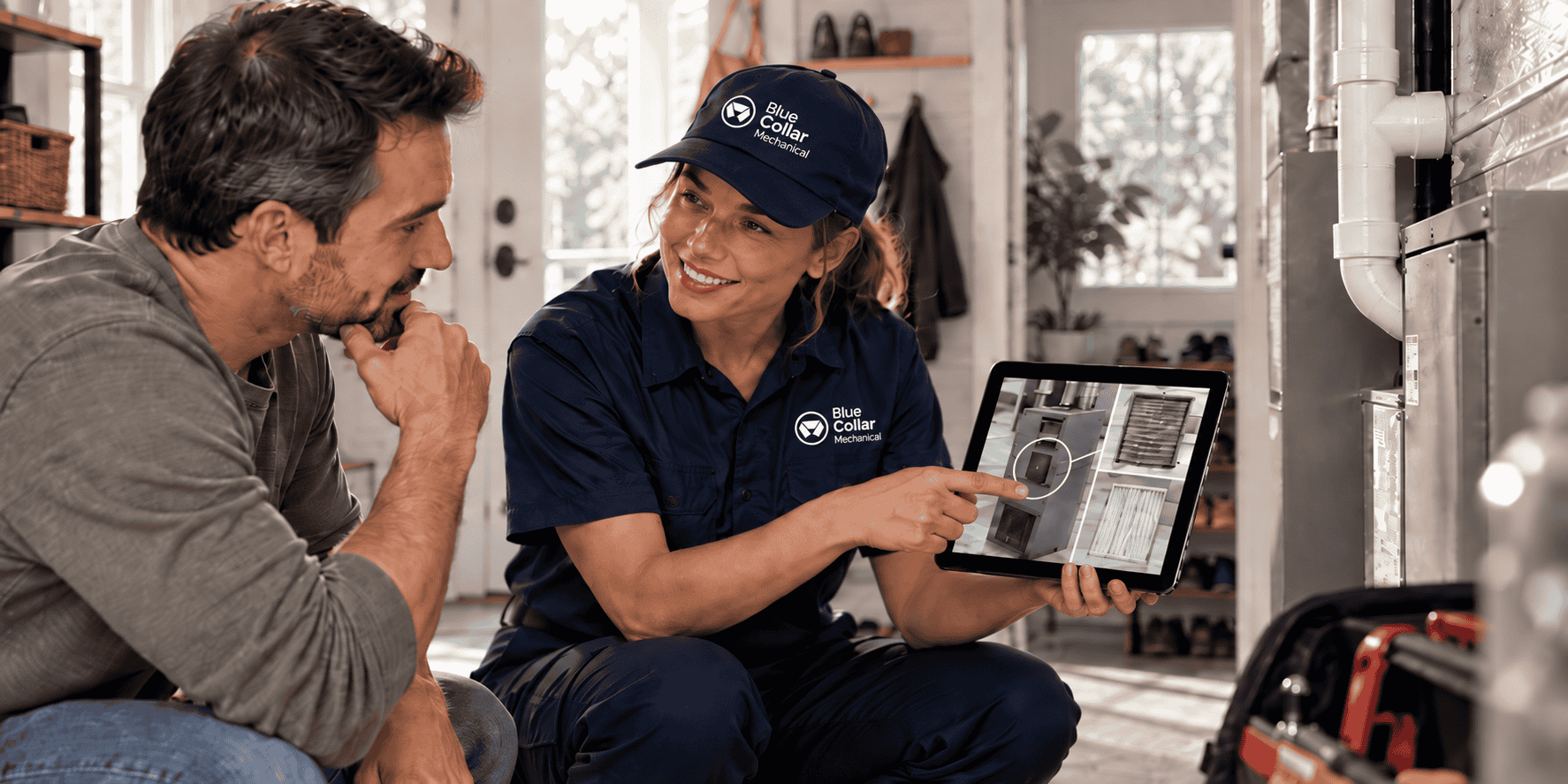
Blue Collar Mechanical trusted partner providing HVAC service

The Difference Between a Contractor and a Trusted Partner in HVAC Service

By Uncategorized

Almost any licensed HVAC contractor can fix a broken system. That is the baseline, not the bar.

The real difference between companies is not whether they can complete a repair. It is whether they operate as a contractor or as a trusted partner.

A contractor may show up once to solve a problem and disappear. A trusted partner is invested in the long term health of your system. They are also honest with you even when honesty does not lead to the biggest invoice.

That difference is the whole reason “medicine, not vitamin” matters as a way of thinking about HVAC service. A contractor treats the symptom in front of them. A partner treats the underlying problem, even the ones you have not noticed yet.

A Contractor Fixes What Is in Front of Them

There is nothing wrong with hiring a contractor for a one time job. However, it comes with real limits.

A contractor’s job is typically to resolve the specific issue you called about, and nothing more.

They have no context on your system’s history. They also have no stake in whether the same problem recurs in six months.

In addition, they may have no reason to flag a related issue they happen to notice along the way because it is not what you called them for.

A Trusted Partner Looks at the Whole Picture

A trusted partner treats every visit as part of an ongoing relationship with your home, not an isolated transaction.

That means noticing and mentioning a worn part that is not causing problems yet. It also means being upfront when a repair is a temporary patch versus a permanent fix.

A partner thinks about your system’s overall lifespan and efficiency, not just the single symptom that prompted the call.

This is the same distinction we laid out in The Difference Between a Service Call and a Relationship. It is really the same idea from a different angle.

Why Vetting a Trusted Partner Matters

The day to day difference between a contractor and a partner is not always visible until you are already a customer. Because of that, vetting matters.

The Better Business Bureau recommends checking licensing, insurance, certifications like NATE, and real customer reviews before hiring any HVAC company. Their guidance is linked below.

It is also worth paying particular attention to how a company talks about its own process during that first conversation.

A company that emphasizes documentation, honest communication, and long term system health is signaling something different than one that only talks about price and availability.

Price Is Where the Difference Shows Up Fastest

A pure contractor mindset often optimizes for the fastest, cheapest fix that resolves the immediate complaint.

As a result, a part may get replaced without addressing why it failed in the first place. A system may also get patched instead of a homeowner being told honestly that replacement is the smarter long term move.

A partner mindset means being willing to tell a homeowner that a bigger investment now saves real money over the next five years. Sometimes, that is a harder conversation than simply doing the quick fix.

What a Trusted Partner Looks Like Over Time

The real test of a contractor versus a trusted partner is not the first visit. It is the third, the fifth, and the tenth.

Does the company remember your system’s history? Do they flag small issues before they become expensive ones? Do they explain their reasoning, or just their invoice?

Years of consistent, honest visits are what actually build that partnership. It is something we have written about directly in What Years of Serving Local Families Has Taught Us.

Why We Built Blue Collar Mechanical Around This Distinction

We did not want to be a company homeowners call once and forget.

We built our process around documentation, honest communication, and commercial level standards applied to residential homes. We did this specifically to function as a long term partner, not a one time contractor.

That is a harder standard to hold ourselves to. It is also exactly the standard we think every homeowner in Park Ridge and Chicagoland deserves.

A licensed contractor can fix your HVAC system today. A trusted partner makes sure you need fewer emergency fixes tomorrow.

Start a real partnership with Blue Collar Mechanical: https://www.trybluecollar.com/ (800) 804-6546

Sources:

https://www.bbb.org/article/news-releases/14091-bbb-tip-heating-and-air-conditioning

HVAC repair technician explaining a home heating and cooling system

Why Communication Matters During HVAC Repairs More Than the Repair Itself

By Uncategorized

Most homeowners can’t tell whether an HVAC repair was actually necessary. That’s not a criticism — it’s just true.

You’re trusting a technician’s expertise. That means the only real safeguard against being oversold or underserved is how clearly they communicate what they found and why it matters.

Communication isn’t a soft skill layered on top of the real work. In HVAC repair, it is part of the real work. It’s the medicine that protects you from either an unnecessary repair or a missed one.

Vague HVAC Repair Answers Should Be a Red Flag

“It needed a part” or “it’s fixed now” tells you nothing.

A technician who can’t or won’t explain what specifically failed, why it failed, and what was done to fix it is asking you to trust a diagnosis you have no way to verify.

That’s a reasonable ask when the explanation is clear and specific. However, it’s a real problem when it isn’t.

Good Communication Means Showing, Not Just Telling

The best technicians don’t just describe a problem — they show it.

For example, it could be a capacitor that’s visibly bulging, a reading on a multimeter that’s clearly out of range, or a filter that’s visibly clogged.

When you can see the evidence behind a diagnosis, you’re not just taking someone’s word for it. Instead, you understand what happened to your own system. That builds real trust instead of asking for blind faith.

This is the same principle behind What Homeowners Deserve From Their HVAC Company: honest diagnostics you can actually follow.

Communication Before the Work Starts, Not Just After

Homeowners deserve to know what a technician plans to check, what they suspect the issue might be, and roughly what it will cost before work begins. They shouldn’t get a surprise total at the end.

This matters even more for bigger repairs. A technician who walks you through the “why” behind a recommended fix gives you the information to make your own decision. That includes explaining what happens if you wait instead of pressuring you into a decision.

Why Communication Matters During an HVAC Repair

During routine maintenance, communication is helpful. During an actual repair, especially an emergency one, it’s essential.

Repairs happen when something’s already gone wrong, often at an inconvenient time. As a result, homeowners are more likely to feel rushed or anxious about cost.

That’s exactly the moment when clear, patient communication about what’s happening and why matters most. Unfortunately, it’s also the moment some companies communicate least because a confused customer is easier to upsell.

What This Looks Like in Practice at Blue Collar Mechanical

Every technician explains what they found, in plain language, before recommending a fix.

If something can wait, we say so. If something can’t, we explain exactly why. We use the same evidence we’d want to see if it were our own home.

This isn’t about being nice. It’s about giving you the information a homeowner actually needs to trust an HVAC repair, not just accept one.

It’s part of the same standard we hold ourselves to across every visit, described in The Difference Between a Service Call and a Relationship.

A Quick Gut Check for Your Next HVAC Repair

If a technician can’t explain, in plain terms, what’s wrong and why it matters, ask again.

A company confident in its diagnosis will welcome the question. One that can’t or won’t answer clearly is worth a second opinion.

The Better Business Bureau’s guidance on choosing an HVAC company, linked below, is also a solid resource if you’re vetting a new provider.

Repairs are stressful enough without wondering whether you can trust what you’re being told.

Clear communication is what turns an HVAC repair into a decision you actually understand, rather than one you’re just hoping worked out.

Schedule a repair with a team that explains everything: https://www.trybluecollar.com/ (800) 804-6546

Sources:

https://www.bbb.org/article/news-releases/14091-bbb-tip-heating-and-air-conditioning

HVAC Contractor Who Knows Your Home

Why Your HVAC Contractor Should Actually Know Your Home, Not Just Your Address

By Uncategorized

Call a large national HVAC contractor twice, and there’s a good chance you’ll get two different technicians who have never seen your system before. They may be working off nothing but whatever’s in a shared database.

As a result, each visit starts from zero. They need to determine what kind of system you have, what’s been fixed before, what’s normal for your house, and what isn’t.

That’s not just inconvenient — it’s a real cost. A contractor who doesn’t know your home is treating a symptom. A contractor who does know your home is treating the cause. That’s the difference between a vitamin and actual medicine.

How an HVAC contractor uses your home’s history

An HVAC system’s problems rarely exist in isolation. A capacitor that failed last year could provide important context. The same applies to a duct modification from a past renovation or a chronic drain line issue in an older home. All of that history changes how a technician should approach a new problem.

A contractor with no history of your system starts from scratch every single visit. This can mean more diagnostic time, more guesswork, and a higher chance of a fix that only treats the surface issue. Meanwhile, the underlying cause may get missed.

We’ve written before about how The Difference Between a Service Call and a Relationship plays out in real diagnostic outcomes. History is at the center of that difference.

It’s faster, which matters most when you need it most

When your AC fails on the hottest day of summer or your furnace quits during a cold snap, speed matters.

A technician who already knows your system’s age, its quirks, and its service history can diagnose and fix a problem significantly faster. In comparison, a technician who’s seeing it for the first time has to learn those details first.

That’s not a small convenience. It’s the difference between a same-day fix and a multi-day wait while a new technician figures out what they’re even looking at.

Consistency catches problems earlier

A contractor who’s been in your home before can notice things a first-time visitor wouldn’t. For example, they may notice a sound that’s slightly different from the last visit. They may also spot an efficiency drop that wasn’t there six months ago.

In addition, they may recognize a part that’s nearing the end of its typical lifespan based on when it was last serviced.

That kind of pattern recognition is only possible with continuity. It’s exactly the kind of early catch that keeps a small issue from becoming an expensive one.

What to look for in an HVAC contractor

Licensing, insurance, and a verifiable track record are the baseline. The Better Business Bureau’s guidance on choosing an HVAC company, linked below, is a good starting point for vetting anyone new.

Beyond that baseline, look for a company that keeps real service records. Look for one that sends technicians who are actually familiar with your account rather than simply whoever’s closest on the schedule.

Most importantly, look for a company that treats your home’s specific quirks as worth remembering rather than starting fresh every time.

This is exactly how we operate

At Blue Collar Mechanical, we don’t treat every visit as a blank slate.

We document what we find, what we fix, and what to watch — every time. Therefore, the next visit starts with context instead of guesswork, whether it’s six months or three years later.

That’s not a premium add-on. It’s the standard we think every homeowner in Park Ridge and Chicagoland deserves. It’s also covered in more depth in our post on What to Look for in an HVAC Contractor.

A home you’ve lived in for years deserves a contractor who knows it half as well as you do. That familiarity isn’t a bonus. It’s what makes every future visit faster, more accurate, and more honest.

Start building that history with Blue Collar Mechanical: https://www.trybluecollar.com/  (800) 804-6546

Sources:

https://www.bbb.org/article/news-releases/14091-bbb-tip-heating-and-air-conditioning

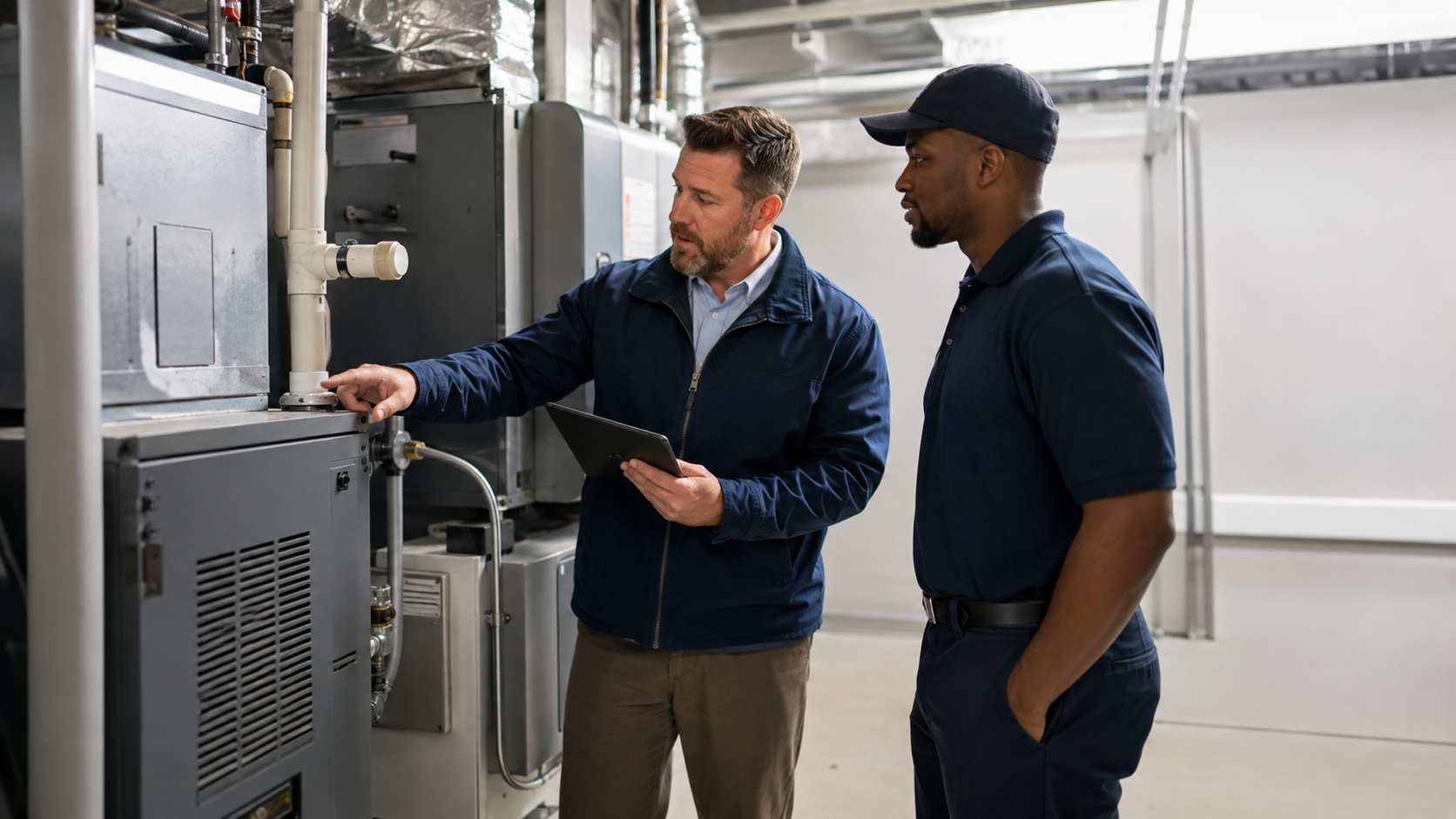
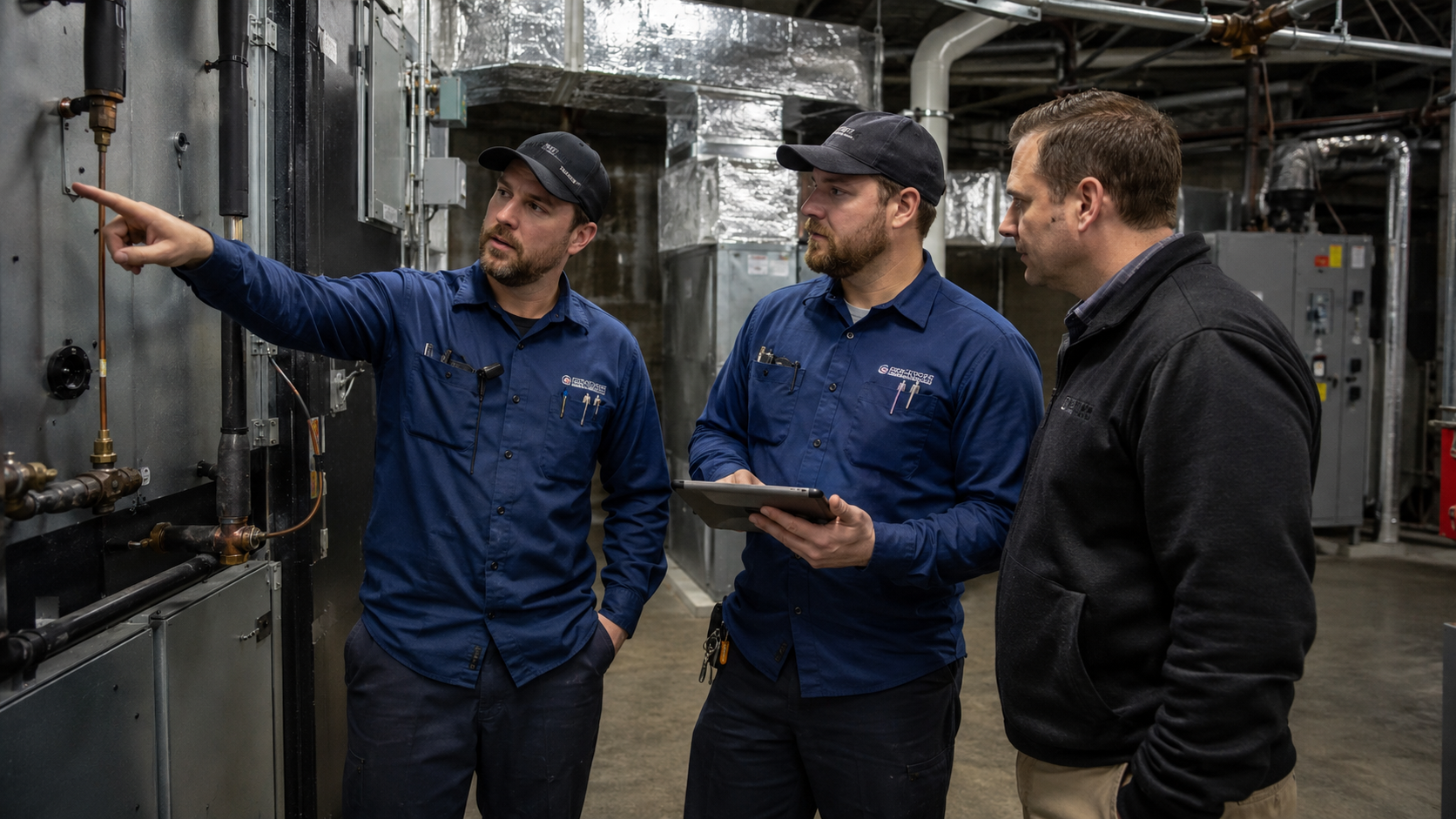
Property manager and HVAC technician reviewing commercial heating and cooling equipment as part of a property management HVAC maintenance program.

Property Management HVAC Maintenance Guide

By Uncategorized

For a property manager, an HVAC failure is never just a mechanical problem. It becomes a tenant complaint, a maintenance ticket, a disruption for your team, and potentially an expensive emergency repair.

Across multiple units or buildings, those problems compound quickly. That’s why property management HVAC maintenance shouldn’t be treated as an optional expense that gets pushed until something stops working.

It’s medicine for the portfolio, not a vitamin you add when the budget allows.

A structured maintenance program helps you find small problems earlier, document equipment condition, plan replacements, and reduce the number of surprises your team has to deal with.

Why Reactive HVAC Maintenance Gets Expensive

Reactive maintenance means waiting until someone reports that the heat or air conditioning isn’t working.

By that point, the problem has already reached the tenant.

Emergency service is also harder to control than scheduled maintenance. You’re dealing with the timing of the failure, technician availability, tenant expectations, and potentially a system that’s been deteriorating for weeks or months.

In addition, equipment that’s allowed to run with unresolved problems may experience additional wear before it finally fails.

A preventative approach changes that.

Instead of asking:

“How quickly can we get this running again?”

You can start asking:

“What is beginning to fail, and when should we address it?”

That distinction matters across an entire portfolio.

Build HVAC Maintenance Into the Lease Cycle

One of the easiest ways to make property management HVAC maintenance more consistent is to connect it to events you’re already managing.

Unit turnover is an ideal opportunity.

When a tenant moves out, inspect the HVAC system before the next tenant moves in. This gives your team a chance to identify issues while the unit is vacant instead of discovering them after someone has already taken possession.

A turnover inspection can help document:

  • Current system condition
  • Filter condition
  • Heating and cooling performance
  • Thermostat operation
  • Airflow
  • Unusual noises or odors
  • Visible drainage issues
  • Equipment age
  • Repairs that may be approaching
  • Items that should be monitored during the next lease

That creates a baseline for the next occupancy period.

Seasonal transitions should also be part of the schedule.

Spring gives you an opportunity to evaluate cooling systems before summer demand increases. Fall does the same for furnaces and heating equipment before Illinois temperatures drop.

The goal is to find the problem during your schedule, not the tenant’s emergency.

Standardize HVAC Maintenance Across the Portfolio

Inconsistency creates blind spots.

One property gets a thorough inspection. Another gets a filter change and a quick visual check. A third gets serviced only when somebody complains.

Eventually, you have multiple buildings with no consistent picture of equipment condition.

A real property management HVAC maintenance program should establish a baseline for what gets inspected and documented across every applicable property.

ANSI/ASHRAE/ACCA Standard 180 provides a recognized framework for HVAC inspection and maintenance in commercial buildings. The U.S. Department of Energy’s Better Buildings Solution Center provides additional information on the standard.

Review ANSI/ASHRAE/ACCA Standard 180 through the Better Buildings Solution Center

The exact requirements for individual systems will vary. However, a recognized framework gives property managers something much more useful than a vague promise of “preventative maintenance.”

It gives you a standard.

Know the Difference Between an HVAC Vendor and a Maintenance Partner

A vendor fixes the problem in front of them.

A strong maintenance partner should also help you understand what’s coming next.

If a system is aging, repair frequency is increasing, or a major component is beginning to deteriorate, you should know before it becomes an emergency replacement.

That information changes how you budget.

Instead of discovering during peak season that a unit needs to be replaced immediately, you can begin planning the capital expense while the equipment is still operational.

A useful HVAC partner should help you understand:

  • Which systems are performing normally
  • Which systems need repairs now
  • Which systems can be monitored
  • Which equipment is generating repeat service calls
  • Which units may be approaching replacement
  • Where recurring complaints suggest a larger problem
  • What should be included in future capital planning

The goal isn’t more service calls. It’s fewer surprises.

Document Every HVAC Inspection and Repair

Documentation protects more than the equipment.

Every service visit should create a usable record of:

  • What was inspected
  • What the technician found
  • What was repaired
  • What was cleaned or adjusted
  • What equipment condition was observed
  • What requires monitoring
  • What may require future replacement

Over time, those records become an operating history for the portfolio.

That history helps answer important questions.

Which systems are costing the most to maintain?

Which units are producing repeat failures?

Are certain buildings generating more comfort complaints?

Is one piece of equipment becoming a capital risk?

Should another repair be approved, or is replacement starting to make more financial sense?

Without documentation, those decisions depend on memory.

With documentation, you have data.

Don’t Wait for Tenant Complaints to Find HVAC Problems

A tenant complaint often tells you that the problem has already progressed far enough to affect the space.

For example, the underlying issue could be:

  • Restricted airflow
  • A dirty filter
  • A failing electrical component
  • Drainage problems
  • Thermostat issues
  • Uneven distribution
  • Refrigerant-related problems
  • Equipment that’s struggling to maintain temperature

A proactive maintenance program is designed to catch signs like these earlier.

That reduces the chance that the first person to identify an HVAC problem is the person paying rent.

Your maintenance team should find the problem before your tenants have to.

Indoor Air Quality Is Part of HVAC Maintenance

Heating and cooling equipment doesn’t operate separately from indoor air quality.

Ventilation, filtration, humidity control, airflow, and system cleanliness all influence the indoor environment.

The EPA’s indoor air quality resources provide guidance on common indoor air concerns, while the CDC also provides information on indoor air quality.

For property managers, this means an HVAC maintenance program shouldn’t stop at asking whether the equipment turns on.

The system also needs to move, filter, heat, cool, and manage air as intended.

If tenants repeatedly report stale air, high humidity, unusual odors, or major temperature differences, those complaints may justify a closer look at the HVAC system and building conditions.

Use Maintenance Records for Capital Planning

One of the biggest benefits of consistent property management HVAC maintenance is visibility into future capital needs.

Equipment replacement shouldn’t come as a complete surprise if a system has been inspected and documented consistently.

Maintenance history can help identify:

  • Increasing repair frequency
  • Repeated electrical failures
  • Declining system performance
  • Corrosion
  • Recurring refrigerant issues
  • Airflow problems
  • Aging equipment
  • Parts becoming difficult to source
  • Systems that are becoming increasingly expensive to keep running

That gives property managers time to communicate with ownership, evaluate replacement options, and budget appropriately.

A planned replacement is still an expense.

But it’s an expense you can manage.

An emergency replacement manages you.

What a Property Management HVAC Maintenance Program Should Include

A strong portfolio-wide program doesn’t need to be complicated.

It needs to be consistent.

Depending on the buildings and equipment involved, the program may include:

  • Seasonal heating inspections
  • Seasonal cooling inspections
  • Filter schedules
  • Electrical inspection
  • Airflow checks
  • Thermostat and control testing
  • Coil inspection and cleaning
  • Condensate drainage inspection
  • Combustion and furnace safety checks where applicable
  • Documentation after every visit
  • Equipment condition tracking
  • Repair history
  • Replacement forecasting

The exact schedule should reflect the equipment, occupancy, building type, and operating conditions.

However, the principle stays the same:

Inspect consistently. Document what you find. Act before small issues become portfolio problems.

The Blue Collar Mechanical Approach

Blue Collar Mechanical works with property managers who need more than a technician who shows up when something breaks.

We bring commercial-level HVAC practices into the properties we service throughout Park Ridge and Chicagoland.

That means looking at the condition of the system, documenting what we find, and helping property managers understand what needs attention now versus what should be planned for later.

For a portfolio, that means greater consistency across units and buildings.

We want you to know:

  • What’s working
  • What’s beginning to wear
  • What needs attention
  • What can be monitored
  • What’s generating repeat problems
  • What may become a future capital expense

Clear documentation. Better planning. Fewer HVAC surprises across the portfolio.

Make Property Management HVAC Maintenance Proactive

The worst time to learn about an HVAC problem is when a tenant tells you the system has already failed.

A structured property management HVAC maintenance program puts your team ahead of that call.

Tie inspections to lease turnover. Schedule seasonal maintenance. Standardize what gets checked. Document every visit. Most importantly, use that information to plan repairs and replacements before the equipment decides the timing for you.

Don’t manage HVAC failure. Manage the system before it fails.

Talk to Blue Collar Mechanical about a portfolio-wide HVAC maintenance program or call (800) 804-6546.

Blue Collar Mechanical provides residential and commercial HVAC service throughout Park Ridge and the greater Chicagoland area.

Sources

U.S. Department of Energy Better Buildings Solution Center — ANSI/ASHRAE/ACCA Standard 180

EPA — Indoor Air Quality

CDC — Indoor Air Quality

Trustworthy HVAC Company for Seniors | Blue Collar Mechanical

By Uncategorized

Trustworthy HVAC Company for Seniors: when your furnace, air conditioner, or water heater stops working, you usually need help quickly. That can make choosing a contractor stressful, especially for senior homeowners who may be worried about being pressured, overcharged, or talked into work they don’t understand. A trustworthy HVAC company for seniors should make the process easier, not more complicated.

At Blue Collar Mechanical, we believe trust starts with how people are treated inside their own homes.

You Should Understand What You’re Paying For

A good HVAC technician should be able to explain:

  • What the problem is.
  • What needs to be repaired.
  • What can wait.
  • What your options are.
  • And why they’re recommending a certain solution.

You shouldn’t have to understand HVAC equipment to understand the recommendation. If something doesn’t make sense, you should feel comfortable asking questions.

Honest Recommendations Matter

Not every problem requires a full replacement. In some cases, a repair is the right solution. Other times, routine maintenance may be enough to keep the system running properly. And when replacement truly is the best long-term option, we’ll explain why.

At Blue Collar Mechanical, our goal is to diagnose the problem and explain the options clearly so homeowners can make an informed decision. No unnecessary pressure. No confusing sales pitch.

Respect for Your Home Matters Too

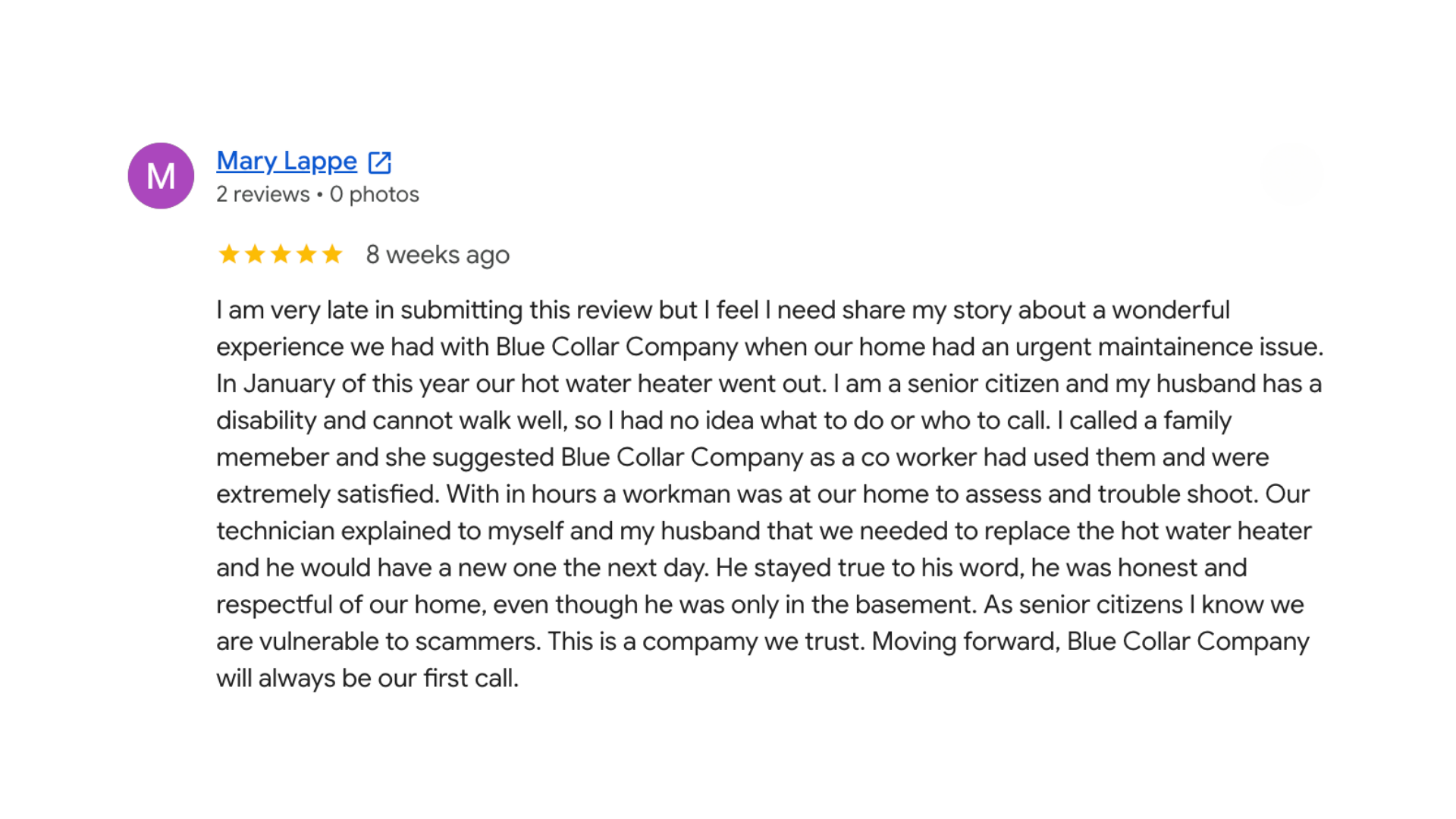
Technical skill is only part of good service. The person coming into your home should also be respectful, dependable, and professional. One of our senior customers recently shared her experience after her water heater went out.

She wrote:

“As senior citizens, I know we are vulnerable to scammers. This is a company we trust.”

She also said:

“He stayed true to his word. He was honest and respectful of our home.”

That means a lot to us because that is exactly what we want homeowners to feel after working with Blue Collar Mechanical.

What Seniors Should Look for in an HVAC Company

A trustworthy HVAC company should offer:

  • Clear explanations
  • Honest recommendations
  • Respectful technicians
  • Reliable communication
  • No-pressure options
  • Strong local reviews
  • A reputation for following through

For senior homeowners, it can also help to choose a local company that expects to build a long-term relationship instead of treating every service call like a one-time transaction.

Helping an Older Parent With Home Repairs?

If you help manage home maintenance for a parent or older family member, it is worth establishing a trusted contractor before something breaks.

  • Save the company’s number.
  • Read recent reviews.
  • Ask how they communicate repair options.
  • And make sure your family member knows they can call you before approving major work if they have questions.

That small amount of preparation can make an unexpected HVAC problem much less stressful.

Why Local Matters

Blue Collar Mechanical serves homeowners throughout Park Ridge and surrounding Chicagoland communities. We live and work in the same communities as many of our customers. That means reputation matters. We want to be the company someone calls again for the next repair, the next maintenance visit, or the next system replacement.

Our approach is simple:

Explain the problem. Recommend what makes sense. Do the work correctly. Respect the home.

That’s what good local service should look like.

A Company You Can Feel Comfortable Calling

When something goes wrong in your home, you should be able to focus on solving the problem instead of wondering whether you can trust the person helping you.

Blue Collar Mechanical brings commercial-level HVAC experience into local homes with an emphasis on honest service, clear communication, and respect.

And one of our customers summed it up better than we could:

“This is a company we trust.”

Need HVAC service or want a second opinion? Contact Blue Collar Mechanical. 

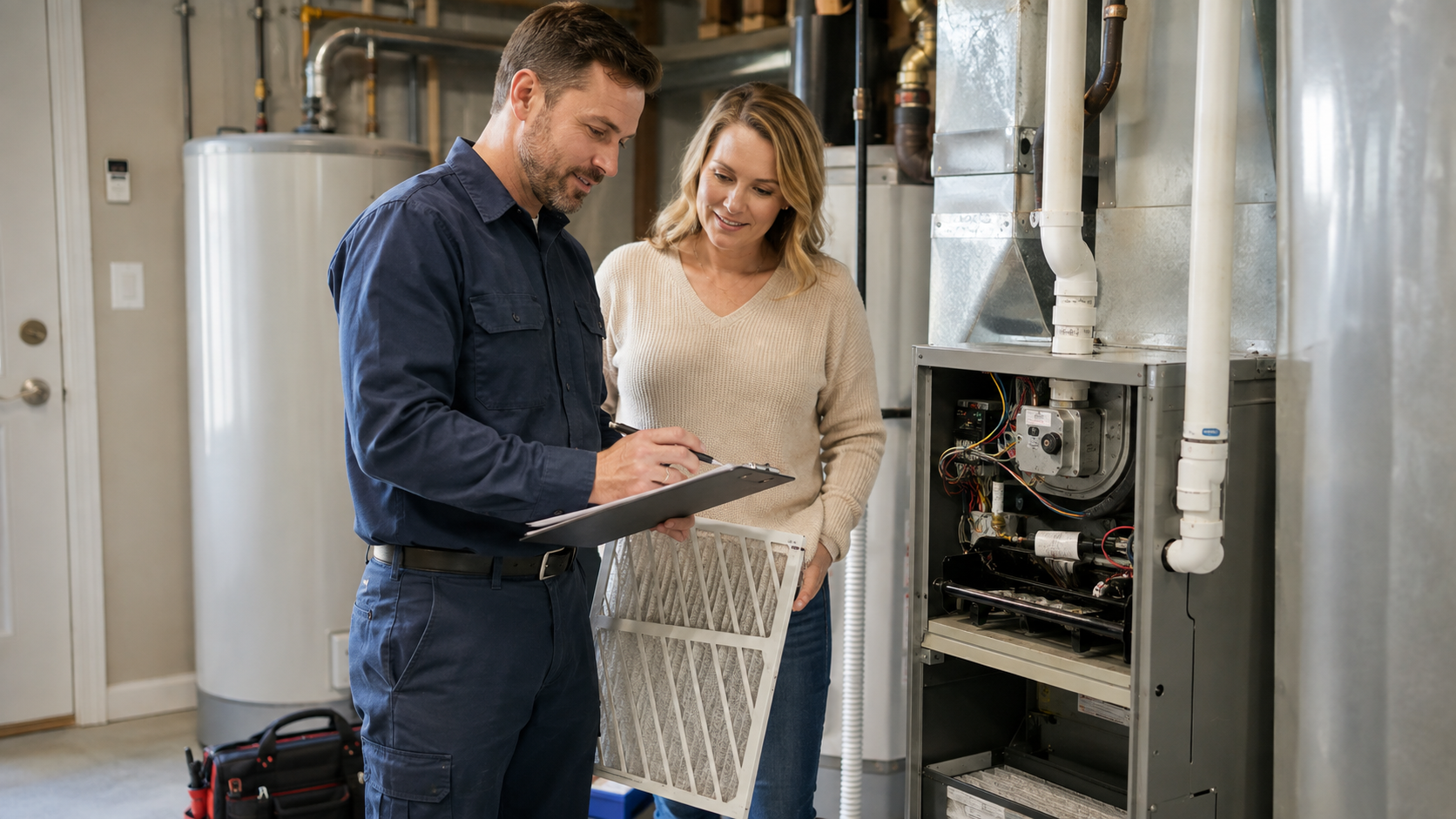
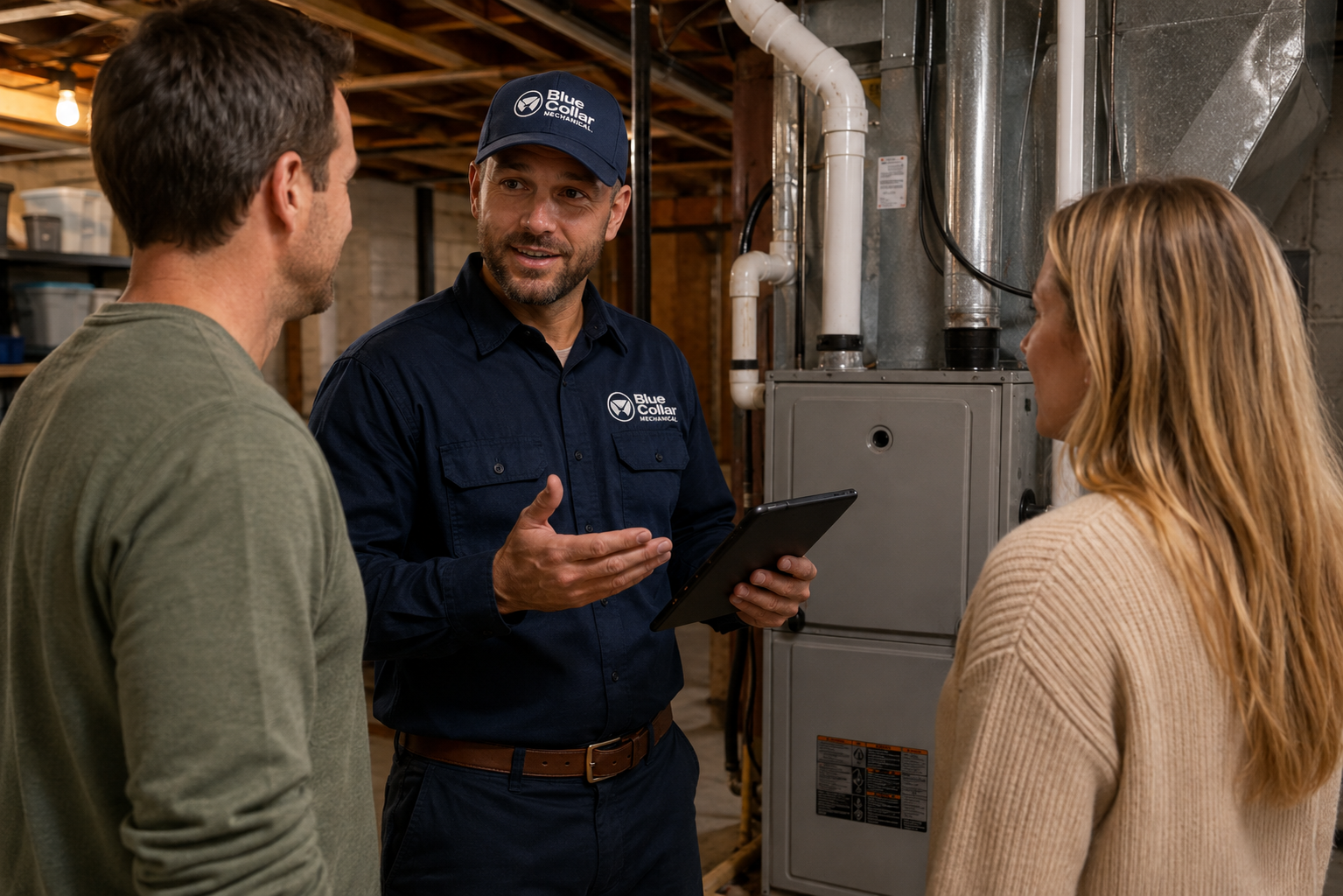
HVAC technician reviewing a home HVAC maintenance checklist with an Illinois homeowner beside a residential furnace.

HVAC Maintenance Checklist for Illinois Homes

By Uncategorized

An HVAC maintenance checklist might sound like something you get to eventually. In reality, consistent maintenance is one of the most effective ways to reduce the risk of expensive heating and cooling problems.

Your HVAC system works through Illinois winters, humid summers, and major temperature swings in between. Small issues that go unnoticed can turn into expensive repairs once the system is under peak demand.

That’s why preventative maintenance isn’t a nice-to-have. It’s the medicine that helps prevent the emergency.

The key is knowing what you can safely handle yourself and what should be left to a trained HVAC professional.

HVAC Maintenance Checklist for Homeowners

Some maintenance tasks don’t require special equipment or HVAC training. However, they still have a meaningful impact on airflow, efficiency, and system performance.

1. Check and Replace Your Air Filter

Start with the filter.

A dirty HVAC filter restricts airflow and forces the system to work harder to move air through your home. As a result, you may notice longer run times, weaker airflow, uneven temperatures, or unnecessary strain on the equipment.

During periods of heavy heating or cooling use, check the filter regularly.

As part of your HVAC maintenance checklist:

  • Check the filter about once a month during peak seasons.
  • Replace it when it becomes visibly dirty.
  • Make sure you’re using the correct size.
  • Follow the manufacturer’s recommendations for your specific filter.

ENERGY STAR includes filter maintenance as a key part of its heating and cooling maintenance checklist.

A furnace or air conditioner shouldn’t have to fight through a dirty filter just to move air through your home.

2. Keep Supply Vents and Returns Clear

Your HVAC system depends on consistent airflow throughout the house.

Furniture, rugs, curtains, boxes, and other household items can block supply vents or return air grilles. When that happens, the system may have to work harder while certain rooms remain uncomfortable.

Walk through your home and make sure vents and returns have room to move air freely.

Also, avoid closing large numbers of supply vents in unused rooms unless an HVAC professional has specifically recommended it. Your ductwork and equipment were designed around a certain amount of airflow.

3. Clear Debris Around the Outdoor AC Unit

During cooling season, your outdoor condenser needs unobstructed airflow.

Leaves, grass clippings, weeds, dirt, and other debris can accumulate around the unit. Therefore, homeowners should periodically check the area and remove anything restricting airflow.

Keep vegetation trimmed back and give the condenser adequate clearance on all sides.

You don’t need to disassemble the equipment or perform repairs yourself. The goal is simply to keep the area around it clear.

4. Pay Attention to Your Thermostat

Your thermostat can reveal problems before the HVAC system stops working completely.

Watch for behavior such as:

  • The system turning on and off repeatedly
  • Heating or cooling that runs constantly
  • Difficulty reaching the set temperature
  • Large temperature differences between rooms
  • The thermostat calling for heating or cooling without a normal response
  • Sudden changes in how frequently the equipment runs

One unusual cycle doesn’t necessarily mean something is wrong. However, a consistent change in system behavior is worth investigating.

Don’t wait for unusual HVAC behavior to turn into a complete breakdown before calling for service.

Professional HVAC Maintenance Checklist: What Should Be Done Twice a Year

Homeowner maintenance only goes so far.

A professional inspection gives a technician access to electrical, mechanical, combustion, airflow, and refrigeration components that require training and proper diagnostic equipment.

For most Illinois homes, scheduling professional HVAC service once before cooling season and once before heating season provides a practical maintenance rhythm.

For a more detailed explanation of seasonal service, read our HVAC Maintenance in Illinois: Homeowner Guide.

5. Inspect Electrical Components and Connections

Electrical components are common sources of HVAC problems.

A professional inspection may include checking:

  • Electrical connections
  • Capacitors
  • Relays
  • Contactors
  • Wiring
  • Motors
  • Control components

Electrical wear isn’t always visible to the homeowner.

In addition, a component can continue operating while already showing signs that it may fail under heavier demand. Finding those problems during routine maintenance gives you the opportunity to address them before the system stops working.

6. Check Refrigerant Performance

Air-conditioning systems rely on the correct refrigerant conditions to operate properly.

If there’s a refrigerant-related problem, the system may:

  • Struggle to cool
  • Run longer than normal
  • Use more energy
  • Develop ice on components
  • Place additional strain on the compressor

Refrigerant diagnostics require professional tools and training.

Instead of simply adding refrigerant, a technician should determine why the system isn’t operating correctly and whether a leak or another issue is involved.

7. Inspect and Clean Coils and Drainage Components

HVAC equipment needs clean heat-transfer surfaces and proper drainage.

Dirty coils can interfere with system performance. Meanwhile, clogged condensate lines can cause water to back up around the system.

During humid Illinois summers, your air conditioner may remove a significant amount of moisture from indoor air. That moisture has to drain correctly.

A professional maintenance visit should evaluate the condition of the coils and condensate drainage system and address buildup when needed.

A drainage problem that starts inside the HVAC system can become water damage outside of it.

8. Inspect Furnace Combustion and Safety Components

Gas furnaces require additional safety checks.

This portion of the HVAC maintenance checklist belongs to a trained professional.

Depending on the equipment, a furnace inspection may include evaluating:

  • Ignition
  • Burners
  • Heat exchanger condition
  • Venting
  • Flame characteristics
  • Safety controls
  • Electrical components
  • Combustion-related operation

The goal isn’t simply to confirm that the furnace produces heat. It’s to confirm that the system is operating as intended before winter places it under sustained demand.

If you’re preparing for heating season, see our guide on how to prepare your furnace for winter.

9. Run a Complete System Cycle

A maintenance visit shouldn’t stop at a visual inspection.

The technician should operate the system through a normal heating or cooling cycle and evaluate how it starts, runs, and shuts down.

This can help identify:

  • Startup problems
  • Short cycling
  • Airflow issues
  • Thermostat problems
  • Unusual noises
  • Performance problems
  • Components behaving differently under operating conditions

A system can look fine while it’s sitting idle.

What matters is how it performs when it’s actually being asked to heat or cool your home.

Why an HVAC Maintenance Checklist Matters

Any single item on this list, skipped once, probably won’t destroy your HVAC system.

The bigger problem is accumulated neglect.

A dirty filter stays in place. Airflow gets worse. A small electrical issue develops. The system begins running longer. A drain starts collecting buildup. Eventually, several minor issues combine into one major service call.

That’s why consistency matters more than intensity.

A homeowner who handles the basic maintenance tasks and schedules professional service consistently has a better chance of identifying developing problems before they become emergencies.

The U.S. Department of Energy also emphasizes regular maintenance as an important part of maintaining HVAC performance. You can review its guidance on operating and maintaining heat pumps.

What This HVAC Maintenance Checklist Doesn’t Replace

A checklist helps you stay ahead of obvious maintenance needs. However, it isn’t a replacement for professional judgment.

An experienced HVAC technician may notice things that don’t fit neatly into a checklist:

  • A motor that sounds different than it should
  • An unusual vibration
  • Airflow that doesn’t match the equipment
  • A component beginning to deteriorate
  • A recurring problem that points to a larger issue
  • Equipment that’s technically operating but performing below expectations

That’s where experience matters.

The goal of preventative maintenance isn’t just to check boxes.

It’s to understand the condition of the system before something fails.

For a deeper look at what professional maintenance should include, read our complete Illinois HVAC maintenance guide.

Turn Your HVAC Maintenance Checklist Into a Schedule

The easiest way to stay consistent is to put HVAC maintenance on the calendar instead of waiting until the system feels different.

A practical schedule for Illinois homeowners looks like this:

Monthly or Regularly During Peak Seasons

  • Check the HVAC filter.
  • Keep supply and return vents clear.
  • Watch for changes in thermostat behavior.
  • Pay attention to unusual noises or odors.
  • Check the area around your outdoor equipment.

Spring

Schedule professional cooling-system maintenance before your air conditioner starts carrying the full summer workload.

Fall

Schedule professional heating-system maintenance before your furnace becomes responsible for keeping the house comfortable through winter.

This approach makes HVAC maintenance proactive rather than reactive.

You choose when the system gets attention instead of waiting for a breakdown to choose for you.

The Blue Collar Mechanical Standard

At Blue Collar Mechanical, we bring commercial-level HVAC standards into the residential homes we service throughout Park Ridge and Chicagoland.

That means looking beyond whether the equipment simply turns on.

We want to understand:

  • How the system is operating
  • What condition the components are in
  • Whether airflow is where it should be
  • Whether something is beginning to wear
  • What needs attention now
  • What can safely be monitored
  • What could become a larger problem later

If the system is in good shape, we’ll tell you.

If something needs attention, we’ll explain what we found, why it matters, and what your options are.

Clear diagnosis. Honest recommendations. Maintenance designed to prevent the next problem.

Don’t Wait for Maintenance to Become a Repair

The best time to use an HVAC maintenance checklist is while everything still seems to be working.

Once the system stops heating or cooling, maintenance is no longer the conversation. You’re dealing with a repair.

Check the basics yourself. Schedule professional service twice a year. Most importantly, pay attention when your HVAC system starts operating differently.

Small problems are easier to deal with before they become no-heat nights, no-AC weekends, or expensive emergency repairs.

Schedule your preventative HVAC maintenance visit with Blue Collar Mechanical or call (800) 804-6546.

Blue Collar Mechanical provides residential and commercial HVAC service throughout Park Ridge and the greater Chicagoland area.

Sources

ENERGY STAR — Heating and Cooling Maintenance Checklist

U.S. Department of Energy — Operating and Maintaining Your Heat Pump

Commercial HVAC Maintenance for Facility Managers

Commercial HVAC Maintenance for Facility Managers

By Uncategorized

Commercial HVAC Maintenance: Best Practices for Facility Managers

For a facility manager, HVAC downtime isn’t an inconvenience. It’s a business problem. A failed rooftop unit in July can mean an unusable retail floor, unhappy tenants, spoiled inventory, or a building that can’t operate as intended. That’s why commercial HVAC maintenance shouldn’t be treated as a discretionary line item to trim when budgets get tight.

It’s the medicine that keeps a building operational, not a vitamin you add when there’s room in the budget.

Follow a Recognized Commercial HVAC Maintenance Standard

A strong maintenance program should be built around a recognized standard, not a vague service schedule.

One of the primary industry references is ANSI/ASHRAE/ACCA Standard 180, which establishes practices for inspecting and maintaining commercial building HVAC systems.

The U.S. Department of Energy’s Better Buildings Solution Center provides an overview of the standard and how it applies to commercial maintenance programs.

Review ANSI/ASHRAE/ACCA Standard 180 through the Better Buildings Solution Center

When evaluating a commercial HVAC vendor, ask what their maintenance program is actually based on.

A contract that simply promises “quarterly maintenance” doesn’t tell you enough. The real question is what gets inspected, how often, how findings are documented, and what happens when something falls outside normal operating conditions.

Preventive Maintenance Protects More Than Uptime

Preventive maintenance isn’t only about avoiding breakdowns. A structured program can also help reduce energy waste, extend equipment life, and make repair costs more predictable.

The Department of Energy has reported that effective operations and maintenance practices can reduce energy use and lower long-term maintenance costs compared with a reactive, break-fix approach.

For a commercial property, even a modest improvement in efficiency can become a meaningful operating expense reduction across multiple units, floors, or buildings.

That’s especially important for systems that run long hours or serve high-occupancy spaces.

When HVAC equipment is allowed to drift out of proper operating condition, the building often pays for it twice: first through higher energy use, then through repair costs.

Build the Maintenance Calendar Around the Building

There is no single maintenance schedule that works for every commercial property.

A rooftop package unit serving a retail space does not operate the same way as a boiler serving a multi-tenant office building. Likewise, a commercial kitchen exhaust system carries different risks than a standard split system.

A proper commercial HVAC maintenance plan should account for:

  • Equipment type
  • Equipment age
  • Run hours
  • Building occupancy
  • Seasonal load
  • Manufacturer recommendations
  • System condition
  • Known problem areas
  • Critical spaces that cannot tolerate downtime

In other words, the maintenance calendar should reflect how the building actually operates.

A generic quarterly visit may be appropriate for some equipment. However, other systems may need more frequent inspection or a different seasonal schedule.

Document Every Inspection

Every commercial HVAC inspection should create a record.

That record should include:

  • What equipment was inspected
  • What was tested
  • What was cleaned or adjusted
  • What problems were found
  • What repairs were completed
  • What should be monitored
  • What may need replacement in the future

Documentation isn’t paperwork for its own sake.

It gives facility managers a real operating history for the equipment. As a result, it becomes easier to spot repeat failures, identify declining performance, plan capital replacements, and verify that maintenance work was actually completed.

It can also be useful during warranty questions, budgeting conversations, and vendor transitions.

If your HVAC vendor can’t show you the history of the equipment they’re maintaining, you don’t have much of a maintenance program.

Don’t Wait for Tenant Complaints to Find HVAC Problems

By the time a tenant reports a comfort issue, the underlying problem may have been developing for days or weeks.

Common examples include:

  • Airflow imbalances
  • Dirty coils
  • Belt wear
  • Refrigerant issues
  • Electrical deterioration
  • Drainage problems
  • Sensor failures
  • Thermostat or control issues
  • Filters that are overdue for replacement

A proactive maintenance program is designed to catch these problems before they turn into tenant complaints or equipment shutdowns.

That matters because tenant comfort problems rarely stay isolated.

A hot office becomes a complaint. A repeated complaint becomes a management issue. A failed unit during extreme weather can become a building operations problem.

The goal is to find the problem before the people using the building have to find it for you.

Watch for Patterns, Not Just Individual Repairs

One of the biggest advantages of documented commercial HVAC maintenance is the ability to see patterns over time.

A single failed capacitor may be an isolated repair.

Repeated electrical failures on the same unit are a pattern.

One clogged drain may be routine.

Recurring water problems in the same area may point to a larger drainage or installation issue.

Facility managers should be able to look at service history and answer questions such as:

  • Which units generate the most service calls?
  • Which systems are consuming the most repair budget?
  • Are the same components failing repeatedly?
  • Which equipment is approaching the end of its useful life?
  • Are comfort complaints concentrated in the same areas?
  • Is a repair still worth making, or should the unit be replaced?

Those answers make capital planning more informed and reduce the chance of being forced into a replacement decision during an emergency.

Vet the HVAC Company You’re Trusting With the Building

Commercial HVAC systems are critical building infrastructure.

The company servicing them should be treated accordingly.

At a minimum, facility managers should verify:

  • Proper licensing
  • Insurance
  • Commercial HVAC experience
  • Experience with the equipment in the building
  • Clear service documentation
  • Defined maintenance procedures
  • Emergency response capabilities
  • Communication and reporting standards

The Better Business Bureau also recommends checking licensing, references, written estimates, and company reputation when selecting an HVAC contractor.

A commercial maintenance relationship should go beyond whether a technician can get a unit running again.

You need to know whether the company can help you keep the building running.

Commercial HVAC Maintenance Should Support Capital Planning

Maintenance and capital planning should not operate separately.

A strong HVAC vendor should help facility managers understand which systems are healthy, which are showing signs of decline, and which may need replacement in the next one, three, or five years.

That gives ownership and management teams time to budget instead of reacting to a surprise failure.

For example, consistent inspection records may reveal:

  • Rising repair frequency
  • Declining efficiency
  • Repeated refrigerant problems
  • Increasing electrical failures
  • Corrosion
  • Deteriorating heat exchangers
  • Control issues
  • Equipment that is becoming difficult to source parts for

That information turns HVAC maintenance into a planning tool instead of just an operating expense.

The Blue Collar Mechanical Approach to Commercial HVAC Maintenance

Blue Collar Mechanical works from commercial-grade practices built around documentation, system condition, and real operating needs.

For facility managers, that means looking beyond whether the equipment is running today.

We focus on understanding:

  • What condition the equipment is actually in
  • What needs immediate attention
  • What can be monitored
  • What is creating unnecessary operating risk
  • Which systems may become capital concerns
  • Where recurring issues suggest a larger root cause

The goal is not to manufacture repair work.

The goal is to give facility managers the information they need to operate the building with fewer surprises.

Clear documentation. Practical recommendations. Maintenance built around uptime.

Keep HVAC Downtime From Becoming a Business Problem

Commercial HVAC failures rarely happen at a convenient time.

They happen during heat waves, cold snaps, high-occupancy periods, tenant move-ins, retail hours, and other moments when downtime carries a real cost.

A structured commercial HVAC maintenance program gives facility managers a better chance to identify those problems before they interrupt operations.

Don’t wait for a rooftop unit, boiler, or critical system to decide when it gets your attention.

Talk to Blue Collar Mechanical about a commercial HVAC maintenance program or call (800) 804-6546.

Sources

U.S. Department of Energy Better Buildings Solution Center — ANSI/ASHRAE/ACCA Standard 180

blue collar technician on a house call in park ridge IL preparing a couple's Furnace for Winter: and giving the a run through the Blue Collar Mechanical Illinois Checklist

Prepare Your Furnace for Cold Weather

By Uncategorized

Prepare Your Furnace for Cold Weather: The Illinois Checklist That Actually Matters

If you want to prepare your furnace for cold weather, don’t wait until Illinois temperatures start dropping. Every fall, homeowners discover that a furnace that worked perfectly well months earlier suddenly won’t start, won’t heat evenly, or can’t keep up with the first real cold stretch.

It usually isn’t bad luck. The system sat unused through the summer, a small problem went unnoticed, and then the furnace was asked to run at full capacity with no warning.

Furnace preparation isn’t about babying your equipment. It’s about finding the problem before you need the system to carry your home through an Illinois winter.

Think of it as the medicine that prevents the emergency, not something you get around to when you have time.

How to Prepare Your Furnace for the Cold Weather in Illinois

The best time to prepare your furnace is early fall, before you actually need consistent heat.

Starting early gives you time to identify and repair problems before a system failure leaves you without heat. Just as importantly, you’re addressing the furnace before HVAC companies are dealing with the rush of emergency no-heat calls that comes with colder weather.

ENERGY STAR recommends checking heating equipment before the heating season as part of its heating and cooling maintenance checklist.

If you’re trying to stay ahead of your entire heating and cooling system, our HVAC Maintenance in Illinois: Homeowner Guide also explains what homeowners should be checking throughout the year.

1. Replace or Check Your Furnace Filter

It sounds too simple to matter, but the filter is one of the first places to look when preparing your furnace.

A dirty filter restricts airflow. As a result, your system has to work harder to move heated air through the house. Restricted airflow can also contribute to longer run times, uneven heating, and unnecessary strain on furnace components.

Before heating season begins:

  • Check the condition of your filter.
  • Replace it if it’s visibly dirty.
  • Make sure you’re using the correct filter size.
  • Continue checking it regularly throughout winter.

How often a filter needs replacement depends on the filter, your home, pets, dust levels, and how heavily the system runs. Instead of relying only on the calendar, check the actual condition of the filter.

Your furnace shouldn’t have to fight for airflow before it even starts heating your home.

2. Have the Heat Exchanger and Ignition System Inspected

Some furnace preparation belongs to the homeowner. This part belongs to a qualified HVAC technician.

A professional furnace inspection should include critical heating and safety components such as the ignition system, burners, venting, electrical connections, and heat exchanger.

Combustion equipment needs to operate and vent correctly. For that reason, furnace inspection isn’t only about preventing an inconvenient breakdown. It also includes checking components related to safe furnace operation.

The EPA provides guidance on combustion pollutants and indoor air quality, while the CDC provides information about indoor air quality and carbon monoxide.

This is one of the reasons furnace maintenance is medicine, not a vitamin. You’re not just protecting comfort. You’re checking the system responsible for heating your home safely through winter.

3. Test a Full Heating Cycle Before You Need It

Don’t make the first freezing night of the year your furnace’s test run.

Turn the heat on early enough in the season to let the furnace complete a full heating cycle.

While it’s running, pay attention to whether:

  • The furnace starts normally.
  • Warm air reaches the rooms throughout your home.
  • The thermostat reaches and holds the set temperature.
  • The system shuts off normally.
  • The furnace starts and stops at reasonable intervals.
  • You hear any unusual noises.
  • You notice persistent unusual odors.

Catching a thermostat, ignition, airflow, or control issue while the weather is still mild gives you time to deal with it on your terms.

By contrast, discovering the same problem when your house is already getting cold turns it into an urgent service call.

4. Check Your Thermostat

Your thermostat is the control center for the heating system, so furnace preparation should include making sure it’s communicating with the system correctly.

Confirm that the thermostat is responding to temperature changes and that your furnace starts when heat is requested.

Also pay attention to unusual cycling.

If the furnace repeatedly starts and stops without completing a normal heating cycle, something may need attention. The thermostat could be involved, but short cycling can have several causes. That’s why diagnosing the system matters more than guessing at a part.

If something feels different from last winter, address it before temperatures drop further.

5. Clear the Area Around Your Furnace

Your furnace needs space around it.

Before winter, remove unnecessary storage, boxes, household products, and other items from around the equipment. In addition, make sure the area is easy for a technician to access if service is needed.

Then check the rest of the house.

Supply and return vents shouldn’t be blocked by:

  • Furniture
  • Rugs
  • Curtains
  • Boxes
  • Other household items

For high-efficiency furnaces that vent through an exterior wall, outdoor intake and exhaust openings also need to remain clear. Once snow and ice arrive, continue checking those areas throughout winter.

Airflow matters throughout the entire system, not just at the furnace.

6. Know the Furnace Warning Signs

A furnace doesn’t always go from working perfectly to completely dead overnight.

Often, there are warning signs first.

Pay attention to:

  • Longer-than-normal run times
  • Uneven heating between rooms
  • Weak airflow
  • Frequent cycling
  • Unusual banging, rattling, buzzing, or grinding
  • Difficulty starting
  • A thermostat that isn’t maintaining temperature
  • Persistent unusual or burning odors
  • Sudden changes in system performance

One symptom doesn’t automatically tell you what’s wrong. However, a noticeable change in how your furnace operates is a reason to investigate.

The goal isn’t to diagnose your own furnace. The goal is to recognize when your furnace is telling you it needs to be diagnosed.

For more information about staying ahead of heating and cooling problems, read our HVAC Maintenance in Illinois: Homeowner Guide.

Why You Should Prepare Your Furnace for Winter Before the Cold Arrives

Illinois isn’t a place where you want to discover a heating problem after the temperature has already dropped.

Once winter arrives, your furnace may need to run for long periods with relatively little downtime. A component that was barely hanging on during a mild fall day may become much more obvious when the system is asked to maintain heat through sustained cold.

Meanwhile, HVAC companies also become busier as temperatures fall and emergency heating calls increase.

That’s why preparation changes the equation.

Instead of waiting for the furnace to decide when you’ll deal with the problem, you inspect it before peak heating season and make that decision yourself.

The cheapest emergency is often the one you catch before it becomes an emergency.

What a Professional Fall Furnace Inspection Should Cover

A real furnace inspection should be more than turning the thermostat up and confirming that warm air comes out.

Depending on your equipment, a professional technician may evaluate:

  • Furnace startup and shutdown
  • Thermostat operation
  • Filter condition and airflow
  • Ignition components
  • Burners
  • Heat exchanger condition
  • Electrical connections
  • Blower operation
  • Venting
  • Combustion-related safety
  • Unusual noises or vibration
  • Overall system performance

The purpose isn’t to find something to sell you.

The purpose is to determine whether the furnace is ready for the workload ahead and identify anything that could affect reliability, performance, or safe operation.

That’s also why ongoing HVAC maintenance matters. Blue Collar Mechanical recommends preparing cooling equipment before summer and heating equipment before winter. You can read the full approach in our Illinois HVAC maintenance guide.

Why Illinois Furnace Preparation Matters

National HVAC advice can only go so far because Illinois puts its own demands on heating equipment.

Chicagoland homeowners deal with long heating seasons, sharp temperature changes, older homes, aging ductwork, additions, finished basements, and HVAC systems that may have been modified several times over the life of the house.

Therefore, preparing a furnace isn’t simply about checking a box on a generic fall home-maintenance list.

The furnace needs to work with the actual home around it.

That’s where local experience matters.

Our article on Why Local HVAC Companies Matter explains why understanding local homes and Illinois weather can make a difference when diagnosing heating and cooling problems.

The Blue Collar Mechanical Standard

At Blue Collar Mechanical, we bring commercial-level HVAC experience into residential homes throughout Park Ridge and the greater Chicagoland area.

Commercial systems require careful diagnostics, reliability, and attention to how the entire system is operating. We believe homeowners should expect the same standard.

During a furnace inspection, we want to understand what the system is telling us before winter puts it under maximum demand.

If everything looks good, we’ll tell you.

If something needs attention, we’ll explain what we found, why it matters, and what your options are.

Clear diagnosis. Honest recommendations. A furnace you can trust when Illinois winter shows up.

Prepare Your Furnace Before Winter Makes the Decision for You

A furnace that turns on today isn’t necessarily a furnace that’s ready for January.

The time to prepare your furnace for cold weather is before you’re relying on it every hour of the day.

Check the filter. Test the heat. Pay attention to warning signs. Most importantly, have the system inspected before a small problem gets to choose the worst possible time to become a large one.

Don’t wait for the first no-heat night to find out whether your furnace was ready.

Schedule your fall furnace inspection with Blue Collar Mechanical or call (800) 804-6546.

Blue Collar Mechanical provides residential and commercial HVAC service throughout Park Ridge and the greater Chicagoland area.

Sources

ENERGY STAR — Heating and Cooling Maintenance Checklist

EPA — Indoor Air Quality

CDC — Indoor Air Quality

blue collar mechanical can fix Chicagoland HVAC Problems: and explain Common Causes

Chicagoland HVAC Problems: Common Causes

By Uncategorized

Chicagoland HVAC problems are different from what homeowners deal with in milder parts of the country. Brutal winter cold, humid summers, older housing stock, aging ductwork, and dramatic seasonal swings put serious stress on heating and cooling systems.

If you’ve had the same HVAC issue repaired more than once, the problem may not be the repair itself. The underlying cause may never have been properly diagnosed.

Local problems need local knowledge. A temporary repair might get your system running again, but a proper diagnosis explains why the problem happened in the first place and what needs to change to keep it from coming back.

Here are some of the HVAC problems we see most often in Park Ridge and throughout Chicagoland.

Chicagoland HVAC Problems We See Most Often

1. Furnaces Working Overtime During Illinois Winters

Illinois winters can force furnaces to run for long stretches with very little downtime.

That sustained workload can expose components that were already beginning to wear out, including:

  • Ignitors
  • Flame sensors
  • Blower motors
  • Electrical components
  • Filters and airflow restrictions
  • Heat exchangers

A furnace may seem completely fine during mild weather and struggle as soon as temperatures drop and the system is asked to run continuously.

That’s why waiting for the furnace to stop working isn’t a maintenance strategy. A small problem in November can become a no-heat emergency in January.

Seasonal inspection and maintenance give a technician the opportunity to identify developing issues before your furnace is working its hardest. For a broader look at preventative HVAC care, visit our HVAC resources and homeowner guides.

2. Humidity-Driven AC Strain in Summer

Chicago summers aren’t just hot. They’re humid. Your air conditioner does more than lower the temperature inside your home. It also removes moisture from the air.

When humidity stays high, your AC may need to run longer to maintain comfortable indoor conditions. Those longer run cycles can increase stress on components and contribute to problems such as:

  • Reduced cooling performance
  • Compressor strain
  • Clogged condensate drains
  • Excess indoor humidity
  • Water around HVAC equipment
  • Higher energy use

The EPA’s indoor air quality guidance also identifies moisture control as an important part of maintaining healthy indoor conditions. If your AC is running constantly but your home still feels warm or sticky, don’t assume that’s just an Illinois summer. Your system may be telling you something. If you’re already noticing changes in cooling performance, read our guide to Signs Your Air Conditioner Needs Repair.

3. Ductwork Built for a Different Era

Some of the most frustrating HVAC problems don’t start with the furnace or air conditioner at all. They start with the ductwork.

Many older Chicagoland homes were built before today’s HVAC systems and comfort expectations existed. Over the years, heating and cooling equipment may have been upgraded while the original ductwork remained largely unchanged.

Homes may also have additions, finished basements, converted attics, or remodeled spaces that were never properly incorporated into the HVAC design.

The result can be:

  • Hot and cold rooms
  • Weak airflow
  • Uneven temperatures between floors
  • Rooms that never feel comfortable
  • Excessively long HVAC run times
  • Higher energy use

Replacing equipment without addressing the airflow problem can leave a homeowner with a brand-new HVAC system and the exact same comfort complaint.

If the real problem is in the ductwork, replacing the equipment attached to it isn’t necessarily the fix.

4. Short Cycling and Electrical Wear

Short cycling happens when your HVAC system repeatedly turns on and off without completing a normal heating or cooling cycle. It’s easy to ignore because the system technically still works, but repeated short cycling can be a sign that something isn’t right.

Possible causes include:

  • Failing capacitors
  • Thermostat problems
  • Restricted airflow
  • Electrical issues
  • Dirty coils
  • Improper equipment sizing
  • Overheating
  • Refrigerant-related problems

Frequent starts and stops can also place additional wear on equipment. If your furnace or AC keeps starting, stopping, and starting again, don’t wait until it stops starting altogether.

For cooling systems, review our Signs Your Air Conditioner Needs Repair for other warning signs worth paying attention to.

5. Water and Condensate Drainage Problems

Your cooling system removes moisture from indoor air, and that water has to go somewhere. During humid Chicagoland summers, condensate drainage systems can handle a significant amount of moisture. If a drain line becomes clogged, damaged, or improperly sloped, that moisture may end up somewhere it doesn’t belong.

What begins as an HVAC issue can become:

  • Water around the furnace or air handler
  • Ceiling or drywall damage
  • Flooring damage
  • Musty odors
  • Excess humidity
  • Mold-friendly conditions

This is one of the clearest examples of why ignoring an HVAC problem can become much more expensive than addressing the original cause.

A clogged drain line is an HVAC problem. Water damage is a property problem. Catch the first one before you have both.

Why Chicagoland HVAC Problems Keep Coming Back

Recurring HVAC problems aren’t always truly recurring. Sometimes they’re problems that were never fully diagnosed in the first place.

If one room is always hot, repeatedly adjusting dampers or changing thermostat settings won’t fix undersized ductwork. Similarly, clearing an AC drain without determining why it keeps clogging may only reset the clock. And when a system continuously struggles with airflow, replacing individual components won’t correct the restriction causing the strain.

A service call shouldn’t only answer:

What stopped working?

It should also answer:

Why did it stop working?

That’s the difference between getting the equipment running again and actually correcting the problem.

Why Generic HVAC Advice Doesn’t Always Work in Chicagoland

A lot of HVAC information online is written for a national audience.

But a house in Park Ridge isn’t dealing with the same conditions as a house in Phoenix, Atlanta, or Southern California.

Chicagoland technicians regularly encounter:

  • Older homes and retrofitted HVAC systems
  • Aging or undersized ductwork
  • Finished basements and home additions
  • Long furnace run times
  • Large seasonal temperature swings
  • High summer humidity
  • Older electrical systems
  • Uneven heating between multiple floors
  • Equipment that has been modified repeatedly over decades

That context matters when you’re diagnosing a problem.

Local HVAC knowledge isn’t a bonus feature. It can be the difference between correcting the source of the problem and treating the symptom again.

The Blue Collar Mechanical Approach

At Blue Collar Mechanical, we bring commercial-level HVAC experience into residential homes throughout Park Ridge and Chicagoland.

Commercial HVAC work demands accurate diagnosis, documentation, reliability, and an understanding of how the entire system works together. We believe homeowners should expect the same standard.

That means we don’t want to simply get your furnace or AC running long enough for us to leave.

We want to understand:

  • What failed
  • Why it failed
  • Whether another issue contributed to the failure
  • What actually needs to be repaired
  • What doesn’t need to be replaced
  • What can help prevent the problem from returning

If everything else looks good, we’ll tell you.

If something needs attention, we’ll explain what it is, why it matters, and what could happen if it’s ignored.

Clear diagnosis. Honest recommendations. Repairs that address the real problem.

Stop Fixing the Same HVAC Problem Twice

Chicagoland HVAC problems rarely become less expensive or less inconvenient when they’re ignored.

Weak airflow becomes a comfort problem.

Drainage issues can become water damage.

Electrical wear can become system failure.

A furnace that struggles in November can become the furnace that stops working when temperatures drop in January.

If your HVAC system is showing you that something isn’t right, find the cause before the problem chooses the timing for you.

Schedule an HVAC diagnostic or service visit with Blue Collar Mechanical or call (800) 804-6546.

We provide residential and commercial HVAC service throughout Park Ridge and the greater Chicagoland area.

Sources

EPA — Indoor Air Quality

Blue Collar Mechanical — HVAC Resources

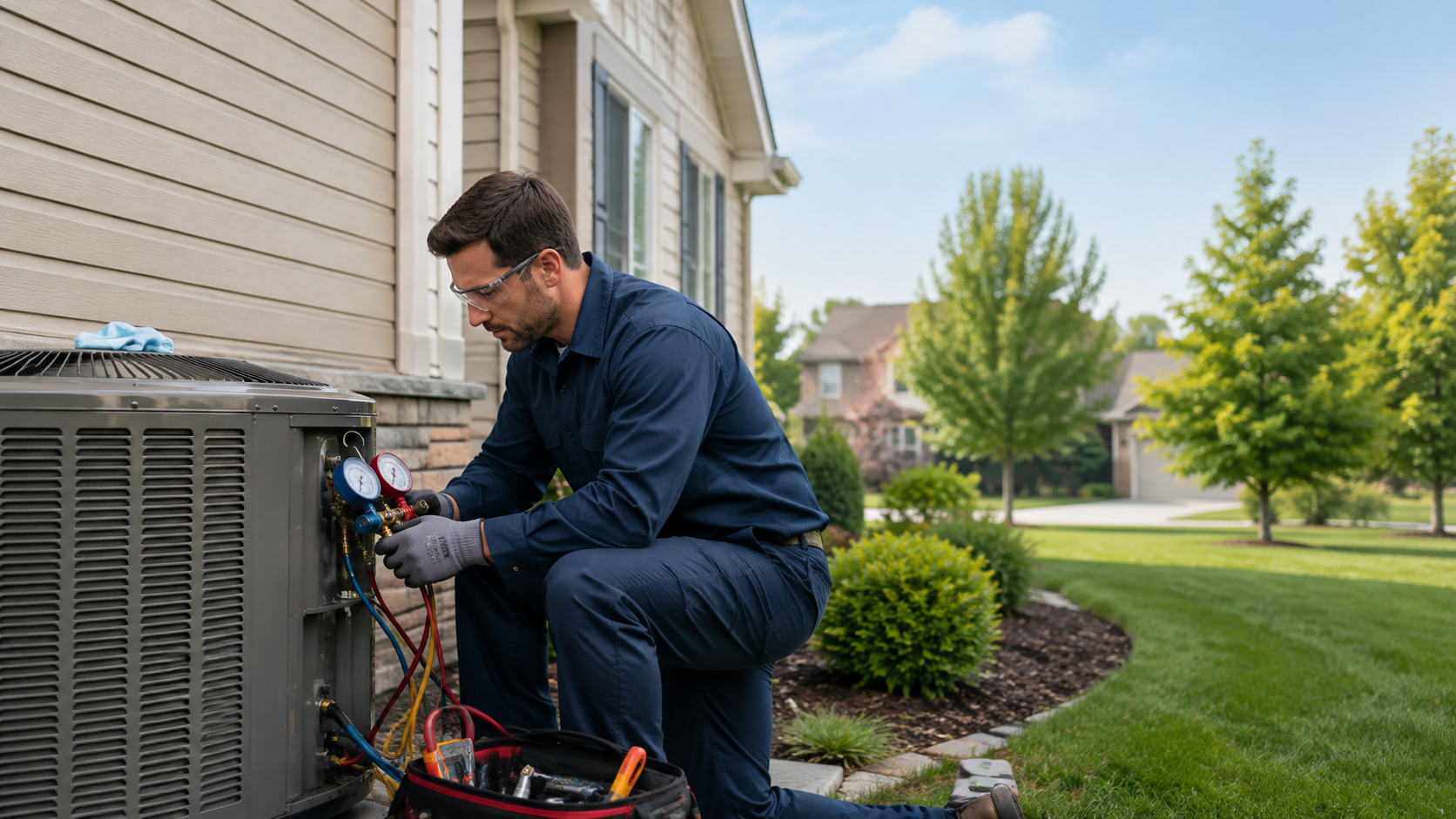
Blue Collar Mechanical HVAC technician performing seasonal maintenance on an outdoor air conditioning unit at a suburban Illinois home.

How Often Should You Service Your HVAC System? A Straight Answer for Illinois Homeowners

By Uncategorized

A lot of homeowners treat HVAC maintenance like a vitamin — something you take when you remember, skip when you’re busy, and never really miss until something feels wrong. That’s the wrong way to think about it. So, how often should you service your HVAC system? For Illinois homeowners, the answer is twice a year: once before cooling season and once before heating season.

Your HVAC system is running for close to nine months a year in Illinois, between winter heating and summer cooling, and when it fails, it doesn’t fail politely. It fails during the coldest week of January or the most humid stretch of July, when you need it most.

Maintenance isn’t a nice-to-have. It’s the medicine that keeps that failure from happening in the first place.

The Short Answer: Service Your HVAC System Twice a Year

Schedule HVAC maintenance twice a year: once in spring before cooling season and once in fall before heating season.

This is the same general seasonal approach recommended by the U.S. Department of Energy and reflected in ENERGY STAR’s maintenance guidance, both linked below.

Two visits a year, roughly six months apart, give a technician the opportunity to catch the wear and tear that builds up during each system’s peak season before it turns into a breakdown.

Why Twice a Year, and Not “Whenever It Seems Fine”

A furnace or air conditioner rarely fails without warning.

It fails after months of a dirty filter restricting airflow, a slightly low refrigerant charge forcing the compressor to work harder than it should, or an ignitor or capacitor that’s been degrading quietly in the background.

None of those are things most homeowners can see or hear until the system finally gives out. A trained technician can catch developing problems earlier, while they’re still manageable instead of becoming an emergency call.

If you’re asking how often should you service your HVAC system because you want to avoid unnecessary appointments, think about what those visits are protecting: your comfort, utility bills, indoor air quality, and the lifespan of equipment that costs thousands of dollars to replace.

Twice-yearly service is protection against problems in all four areas.

What a Real HVAC Maintenance Visit Should Include

Not every “tune-up” is created equal.

A maintenance visit worth paying for should include:

  • Inspection of electrical connections
  • Refrigerant charge and pressure checks when applicable
  • Cleaning of coils and drain lines
  • Combustion and safety checks on gas furnaces
  • Filter inspection
  • Airflow assessment
  • Inspection for worn or failing components
  • A clear explanation of anything that needs attention — and what can safely wait

We built a full walkthrough of what belongs in a proper visit in our HVAC Maintenance in Illinois: Complete Homeowner Guide, and it’s worth comparing against what your current provider is actually doing.

What Happens If You Skip HVAC Maintenance

Skipping maintenance doesn’t necessarily save money. It can simply defer the cost while increasing the risk of a larger problem later.

Systems that aren’t serviced can gradually lose efficiency, which may show up as a slowly climbing utility bill that homeowners don’t immediately connect to their HVAC system.

Then, when something finally breaks, the problem isn’t always isolated. One struggling component can place additional strain on other parts of the system.

The Department of Energy emphasizes regular maintenance as an important part of keeping heating and cooling equipment operating efficiently.

The goal isn’t to wait until your HVAC system gives you a reason to call. It’s to catch the reason before it becomes a breakdown.

How Often Should You Service Your HVAC System in Illinois?

In Illinois, twice-yearly HVAC maintenance matters even more because your heating and cooling equipment has to handle two demanding seasons.

Chicagoland puts real pressure on a system. Furnaces run hard through long winters, and air conditioners work through hot, humid summers, with relatively little downtime between the two.

That back-to-back seasonal load makes preventative maintenance especially important for local homeowners.

If you want to know what that looks like on the ground, our post on Common HVAC Problems in Chicagoland Homes breaks down the specific failure points we see most often in this region.

The Blue Collar Mechanical Standard

We treat every residential maintenance visit the way a commercial building manager would expect a service contract to run: documented, thorough, and honest about what we find. If nothing needs attention, we tell you that.

If something is wearing out, we explain what it is, why it matters, and what could happen if it’s ignored.

No unnecessary upsells. No scare tactics. Just the information you need to make a decision about your own home.

We bring the same commercial-level HVAC standards we use on larger systems into the homes we service throughout Park Ridge and Chicagoland.

Twice a year isn’t a sales pitch. It’s a practical maintenance cadence designed to keep your system reliable through an Illinois winter and an Illinois summer.

Don’t wait for your HVAC system to choose the worst day of the year to tell you something is wrong.

Schedule your seasonal HVAC maintenance visit with Blue Collar Mechanical

Sources

U.S. Department of Energy — Operating and Maintaining Your Heat Pump

ENERGY STAR — Heating and Cooling Maintenance Checklist