

A furnace blowing cold air is not the welcome you want on a chilly October morning. You turn up the heat, hear the system start, and wait. Yet the room never feels warmer.
Sometimes, the answer is a thermostat setting. Other times, the blower runs while a heating problem prevents the burners from staying on. The important step is finding out which situation you have before colder weather makes the problem harder to live with.
For homeowners in Park Ridge and Chicagoland, October is a good time to address unreliable heat. Here is how to make sense of the symptom without turning a service problem into a risky project.
Why Is Your Furnace Blowing Cold Air?
A furnace can circulate cool air because of its fan setting, a brief startup period, restricted airflow, or a heating fault. Those possibilities need different responses. Therefore, moving air alone does not prove that the furnace is producing heat.
Carrier’s guide to cold air from a furnace identifies thermostat settings, ignition problems, and airflow restrictions among possible causes.
Think about the pattern before assuming the worst. Does the air warm up after startup? Is the fan running between heating cycles? Or does the system keep trying to heat without raising the room temperature?
Those details give a technician a more useful starting point than simply saying the furnace feels different.
Start With The Thermostat Screen
First, confirm that the thermostat is in heating mode. The target temperature should also be above the current room temperature.
Next, look at the fan setting. On many systems, ON keeps the fan running between heating cycles. As a result, you may feel room-temperature air even when the burners are off. AUTO usually ties fan operation to the heating or cooling cycle.
Check for a schedule or temporary hold that conflicts with your intended setting. For example, a daytime setback may still apply when someone is unexpectedly home.
Make one appropriate adjustment, then observe what happens. Avoid repeatedly raising the temperature or resetting the equipment. If the system still cannot deliver heat, another thermostat change may not solve the problem.
Notice Whether The Problem Affects Every Room
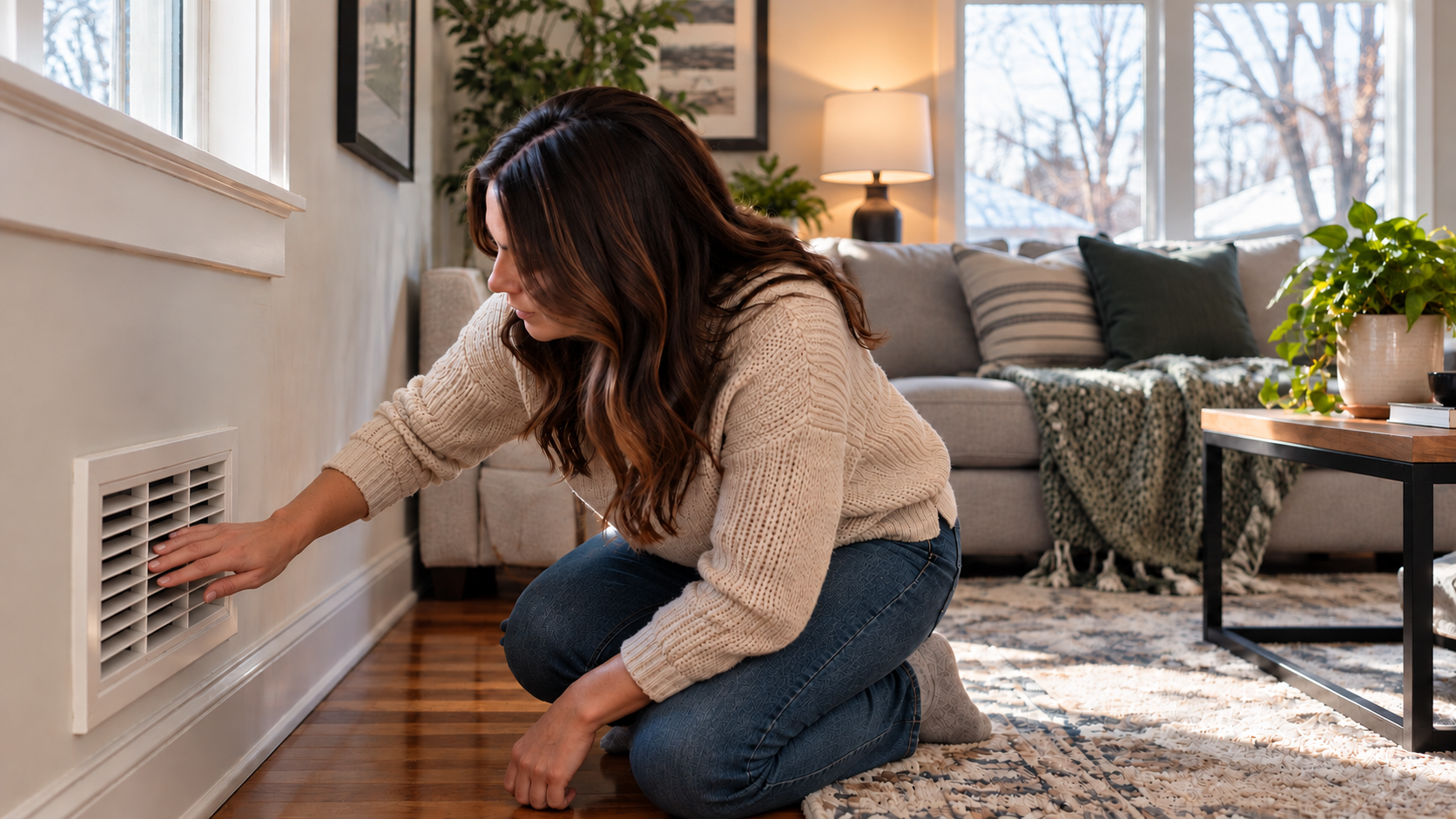
Before calling, compare the rooms you normally use. You do not need a technical test or a special tool. Instead, make a simple note of what feels different.
Consider these questions:
- Does every supply vent feel cool, or only one?
- Is the house temperature falling while the system runs?
- Did the issue begin after a filter change or thermostat adjustment?
- Does heat arrive briefly and then disappear?
- Have you noticed a new noise or visible water nearby?
For example, a bedroom that has always felt cooler presents a different complaint from a whole house that suddenly has no heat. Neither observation identifies a failed part. However, both help explain what needs investigating.
Keep the description specific. A clear timeline can make the conversation more productive.
Check The Filter Without Opening The Furnace
If your filter is safely accessible, check it according to the equipment instructions. Turn the system off before changing it, and use the correct size and approved type.
A heavily loaded filter can restrict airflow. In some cases, overheating causes a safety control to stop the burners while the blower continues running. However, finding a dirty filter does not prove that it is the only problem.
ENERGY STAR recommends checking filters regularly, particularly during periods of heavy use. Follow your equipment and filter instructions for replacement timing.
If replacing an overdue filter does not restore normal operation, arrange service. Do not remove internal panels, adjust gas components, or bypass a safety switch.
Know When To Stop Troubleshooting
A furnace blowing cold air needs professional attention when basic setting checks do not resolve it. Repeated shutdowns, failed starts, and continued loss of indoor temperature also warrant a service call.
Gas smells and carbon monoxide alarms require a different response. Leave immediately and call 911 or your gas utility from a safe location. If you suspect a gas leak, do not operate switches or equipment while leaving. Nicor Gas explains these emergency steps.
For a routine heating complaint without those emergency signs, describe the symptom when you contact your HVAC company. Also mention any recent work or changes to the system.
Ask For A Diagnosis That Explains The Repair
The useful answer is not simply that a part needs replacing. You should understand what the technician found and how it relates to the missing heat.
Before approving work, ask:
- What is preventing the system from heating normally?
- How did you confirm the cause?
- What repair do you recommend, and what will it cost?
- How will you check operation after the repair?
These questions help connect the recommendation to your actual problem. Our article on clear communication during HVAC repairs explains why that clarity matters.
At Blue Collar Mechanical, we bring commercial-level HVAC experience into residential homes. That means looking at the system, explaining the findings, and helping you understand the next step.
Common Questions About Cold Air From A Furnace
- Does Cool Air Always Mean The Furnace Is Broken?No. A brief startup period or fan setting may explain it. Persistent cool air during a call for heat needs closer attention.
- Should I Keep Turning The Thermostat Higher?No. Once the thermostat is calling for heat, repeated increases will not diagnose the failure. Focus on whether the system responds normally.
- Does This Mean I Need A New Furnace?Not necessarily. A furnace blowing cold air is a symptom, not a replacement verdict. A diagnosis should come before that decision.
Get The Heat Working Before You Need It Every Night
You should not have to plan your evening around the warmest room in the house. If you keep finding your furnace blowing cold air, address it now.
Blue Collar Mechanical serves homeowners in Park Ridge and throughout Chicagoland. Schedule a heating diagnostic or call (800) 804-6546. Find the cause before a colder night makes the decision for you.