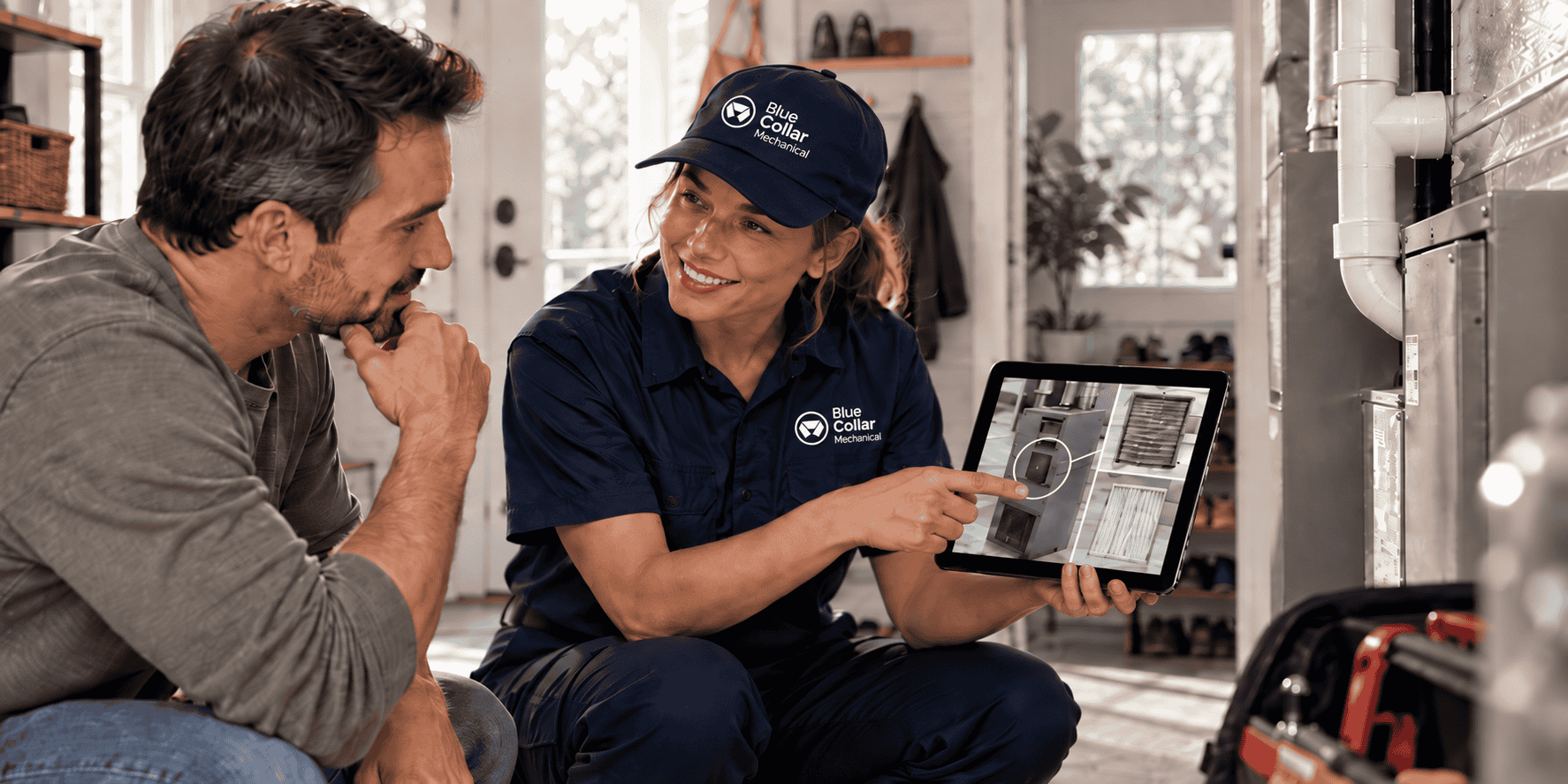



Call a large national HVAC contractor twice, and there’s a good chance you’ll get two different technicians who have never seen your system before. They may be working off nothing but whatever’s in a shared database.
As a result, each visit starts from zero. They need to determine what kind of system you have, what’s been fixed before, what’s normal for your house, and what isn’t.
That’s not just inconvenient — it’s a real cost. A contractor who doesn’t know your home is treating a symptom. A contractor who does know your home is treating the cause. That’s the difference between a vitamin and actual medicine.
How an HVAC contractor uses your home’s history
An HVAC system’s problems rarely exist in isolation. A capacitor that failed last year could provide important context. The same applies to a duct modification from a past renovation or a chronic drain line issue in an older home. All of that history changes how a technician should approach a new problem.
A contractor with no history of your system starts from scratch every single visit. This can mean more diagnostic time, more guesswork, and a higher chance of a fix that only treats the surface issue. Meanwhile, the underlying cause may get missed.
We’ve written before about how The Difference Between a Service Call and a Relationship plays out in real diagnostic outcomes. History is at the center of that difference.
It’s faster, which matters most when you need it most
When your AC fails on the hottest day of summer or your furnace quits during a cold snap, speed matters.
A technician who already knows your system’s age, its quirks, and its service history can diagnose and fix a problem significantly faster. In comparison, a technician who’s seeing it for the first time has to learn those details first.
That’s not a small convenience. It’s the difference between a same-day fix and a multi-day wait while a new technician figures out what they’re even looking at.
Consistency catches problems earlier
A contractor who’s been in your home before can notice things a first-time visitor wouldn’t. For example, they may notice a sound that’s slightly different from the last visit. They may also spot an efficiency drop that wasn’t there six months ago.
In addition, they may recognize a part that’s nearing the end of its typical lifespan based on when it was last serviced.
That kind of pattern recognition is only possible with continuity. It’s exactly the kind of early catch that keeps a small issue from becoming an expensive one.
What to look for in an HVAC contractor
Licensing, insurance, and a verifiable track record are the baseline. The Better Business Bureau’s guidance on choosing an HVAC company, linked below, is a good starting point for vetting anyone new.
Beyond that baseline, look for a company that keeps real service records. Look for one that sends technicians who are actually familiar with your account rather than simply whoever’s closest on the schedule.
Most importantly, look for a company that treats your home’s specific quirks as worth remembering rather than starting fresh every time.
This is exactly how we operate
At Blue Collar Mechanical, we don’t treat every visit as a blank slate.
We document what we find, what we fix, and what to watch — every time. Therefore, the next visit starts with context instead of guesswork, whether it’s six months or three years later.
That’s not a premium add-on. It’s the standard we think every homeowner in Park Ridge and Chicagoland deserves. It’s also covered in more depth in our post on What to Look for in an HVAC Contractor.
A home you’ve lived in for years deserves a contractor who knows it half as well as you do. That familiarity isn’t a bonus. It’s what makes every future visit faster, more accurate, and more honest.
Start building that history with Blue Collar Mechanical: https://www.trybluecollar.com/ (800) 804-6546
Sources:
https://www.bbb.org/article/news-releases/14091-bbb-tip-heating-and-air-conditioning