

An HVAC maintenance checklist might sound like something you get to eventually. In reality, consistent maintenance is one of the most effective ways to reduce the risk of expensive heating and cooling problems.
Your HVAC system works through Illinois winters, humid summers, and major temperature swings in between. Small issues that go unnoticed can turn into expensive repairs once the system is under peak demand.
That’s why preventative maintenance isn’t a nice-to-have. It’s the medicine that helps prevent the emergency.
The key is knowing what you can safely handle yourself and what should be left to a trained HVAC professional.
HVAC Maintenance Checklist for Homeowners
Some maintenance tasks don’t require special equipment or HVAC training. However, they still have a meaningful impact on airflow, efficiency, and system performance.
1. Check and Replace Your Air Filter
Start with the filter.
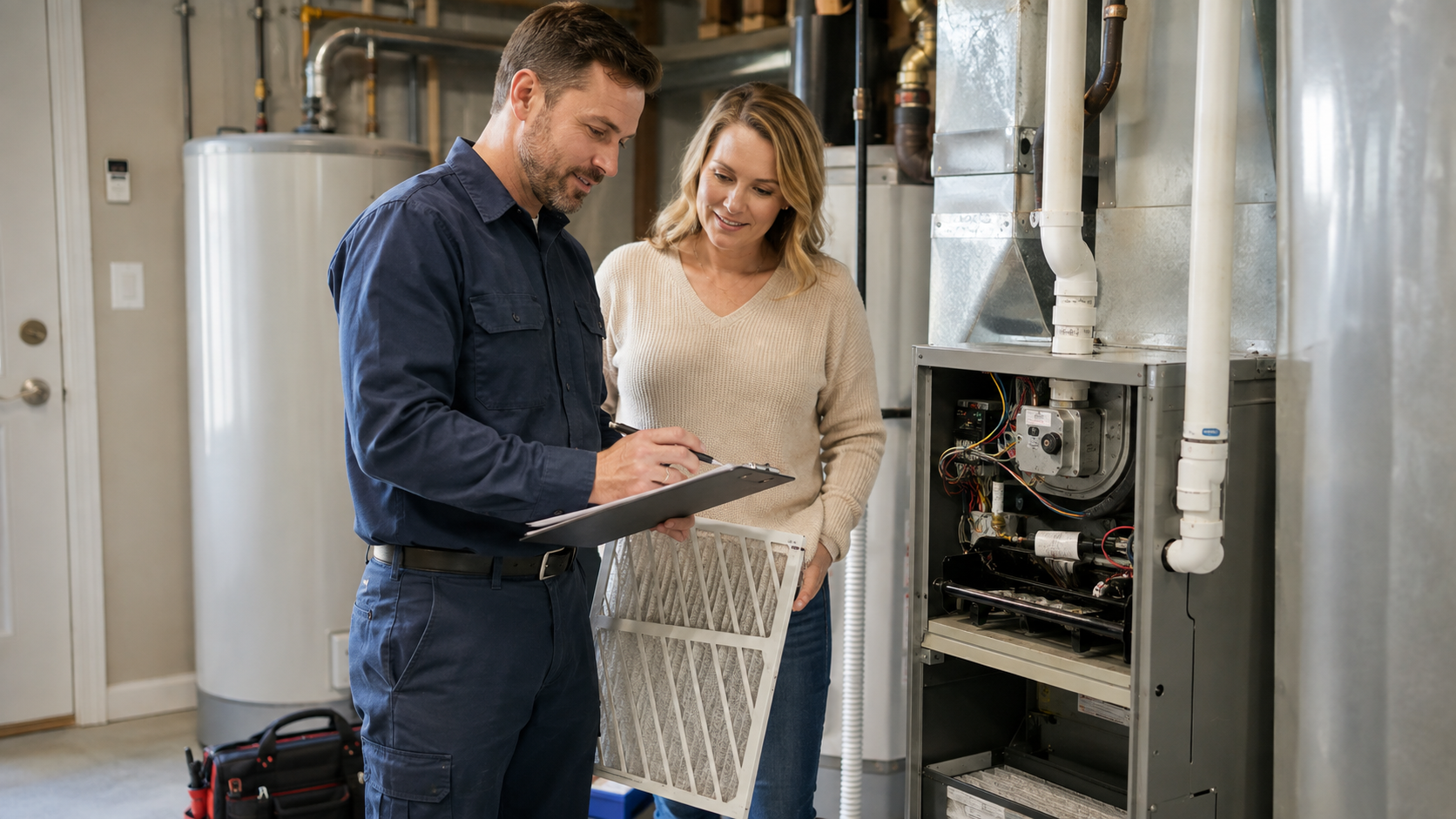
A dirty HVAC filter restricts airflow and forces the system to work harder to move air through your home. As a result, you may notice longer run times, weaker airflow, uneven temperatures, or unnecessary strain on the equipment.
During periods of heavy heating or cooling use, check the filter regularly.
As part of your HVAC maintenance checklist:
- Check the filter about once a month during peak seasons.
- Replace it when it becomes visibly dirty.
- Make sure you’re using the correct size.
- Follow the manufacturer’s recommendations for your specific filter.
ENERGY STAR includes filter maintenance as a key part of its heating and cooling maintenance checklist.
A furnace or air conditioner shouldn’t have to fight through a dirty filter just to move air through your home.
2. Keep Supply Vents and Returns Clear
Your HVAC system depends on consistent airflow throughout the house.
Furniture, rugs, curtains, boxes, and other household items can block supply vents or return air grilles. When that happens, the system may have to work harder while certain rooms remain uncomfortable.
Walk through your home and make sure vents and returns have room to move air freely.
Also, avoid closing large numbers of supply vents in unused rooms unless an HVAC professional has specifically recommended it. Your ductwork and equipment were designed around a certain amount of airflow.
3. Clear Debris Around the Outdoor AC Unit
During cooling season, your outdoor condenser needs unobstructed airflow.
Leaves, grass clippings, weeds, dirt, and other debris can accumulate around the unit. Therefore, homeowners should periodically check the area and remove anything restricting airflow.
Keep vegetation trimmed back and give the condenser adequate clearance on all sides.
You don’t need to disassemble the equipment or perform repairs yourself. The goal is simply to keep the area around it clear.
4. Pay Attention to Your Thermostat
Your thermostat can reveal problems before the HVAC system stops working completely.
Watch for behavior such as:
- The system turning on and off repeatedly
- Heating or cooling that runs constantly
- Difficulty reaching the set temperature
- Large temperature differences between rooms
- The thermostat calling for heating or cooling without a normal response
- Sudden changes in how frequently the equipment runs
One unusual cycle doesn’t necessarily mean something is wrong. However, a consistent change in system behavior is worth investigating.
Don’t wait for unusual HVAC behavior to turn into a complete breakdown before calling for service.
Professional HVAC Maintenance Checklist: What Should Be Done Twice a Year
Homeowner maintenance only goes so far.
A professional inspection gives a technician access to electrical, mechanical, combustion, airflow, and refrigeration components that require training and proper diagnostic equipment.
For most Illinois homes, scheduling professional HVAC service once before cooling season and once before heating season provides a practical maintenance rhythm.
For a more detailed explanation of seasonal service, read our HVAC Maintenance in Illinois: Homeowner Guide.
5. Inspect Electrical Components and Connections
Electrical components are common sources of HVAC problems.
A professional inspection may include checking:
- Electrical connections
- Capacitors
- Relays
- Contactors
- Wiring
- Motors
- Control components
Electrical wear isn’t always visible to the homeowner.
In addition, a component can continue operating while already showing signs that it may fail under heavier demand. Finding those problems during routine maintenance gives you the opportunity to address them before the system stops working.
6. Check Refrigerant Performance
Air-conditioning systems rely on the correct refrigerant conditions to operate properly.
If there’s a refrigerant-related problem, the system may:
- Struggle to cool
- Run longer than normal
- Use more energy
- Develop ice on components
- Place additional strain on the compressor
Refrigerant diagnostics require professional tools and training.
Instead of simply adding refrigerant, a technician should determine why the system isn’t operating correctly and whether a leak or another issue is involved.
7. Inspect and Clean Coils and Drainage Components
HVAC equipment needs clean heat-transfer surfaces and proper drainage.
Dirty coils can interfere with system performance. Meanwhile, clogged condensate lines can cause water to back up around the system.
During humid Illinois summers, your air conditioner may remove a significant amount of moisture from indoor air. That moisture has to drain correctly.
A professional maintenance visit should evaluate the condition of the coils and condensate drainage system and address buildup when needed.
A drainage problem that starts inside the HVAC system can become water damage outside of it.
8. Inspect Furnace Combustion and Safety Components
Gas furnaces require additional safety checks.
This portion of the HVAC maintenance checklist belongs to a trained professional.
Depending on the equipment, a furnace inspection may include evaluating:
- Ignition
- Burners
- Heat exchanger condition
- Venting
- Flame characteristics
- Safety controls
- Electrical components
- Combustion-related operation
The goal isn’t simply to confirm that the furnace produces heat. It’s to confirm that the system is operating as intended before winter places it under sustained demand.
If you’re preparing for heating season, see our guide on how to prepare your furnace for winter.
9. Run a Complete System Cycle
A maintenance visit shouldn’t stop at a visual inspection.
The technician should operate the system through a normal heating or cooling cycle and evaluate how it starts, runs, and shuts down.
This can help identify:
- Startup problems
- Short cycling
- Airflow issues
- Thermostat problems
- Unusual noises
- Performance problems
- Components behaving differently under operating conditions
A system can look fine while it’s sitting idle.
What matters is how it performs when it’s actually being asked to heat or cool your home.
Why an HVAC Maintenance Checklist Matters
Any single item on this list, skipped once, probably won’t destroy your HVAC system.
The bigger problem is accumulated neglect.
A dirty filter stays in place. Airflow gets worse. A small electrical issue develops. The system begins running longer. A drain starts collecting buildup. Eventually, several minor issues combine into one major service call.
That’s why consistency matters more than intensity.
A homeowner who handles the basic maintenance tasks and schedules professional service consistently has a better chance of identifying developing problems before they become emergencies.
The U.S. Department of Energy also emphasizes regular maintenance as an important part of maintaining HVAC performance. You can review its guidance on operating and maintaining heat pumps.
What This HVAC Maintenance Checklist Doesn’t Replace
A checklist helps you stay ahead of obvious maintenance needs. However, it isn’t a replacement for professional judgment.
An experienced HVAC technician may notice things that don’t fit neatly into a checklist:
- A motor that sounds different than it should
- An unusual vibration
- Airflow that doesn’t match the equipment
- A component beginning to deteriorate
- A recurring problem that points to a larger issue
- Equipment that’s technically operating but performing below expectations
That’s where experience matters.
The goal of preventative maintenance isn’t just to check boxes.
It’s to understand the condition of the system before something fails.
For a deeper look at what professional maintenance should include, read our complete Illinois HVAC maintenance guide.
Turn Your HVAC Maintenance Checklist Into a Schedule
The easiest way to stay consistent is to put HVAC maintenance on the calendar instead of waiting until the system feels different.
A practical schedule for Illinois homeowners looks like this:
Monthly or Regularly During Peak Seasons
- Check the HVAC filter.
- Keep supply and return vents clear.
- Watch for changes in thermostat behavior.
- Pay attention to unusual noises or odors.
- Check the area around your outdoor equipment.
Spring
Schedule professional cooling-system maintenance before your air conditioner starts carrying the full summer workload.
Fall
Schedule professional heating-system maintenance before your furnace becomes responsible for keeping the house comfortable through winter.
This approach makes HVAC maintenance proactive rather than reactive.
You choose when the system gets attention instead of waiting for a breakdown to choose for you.
The Blue Collar Mechanical Standard
At Blue Collar Mechanical, we bring commercial-level HVAC standards into the residential homes we service throughout Park Ridge and Chicagoland.
That means looking beyond whether the equipment simply turns on.
We want to understand:
- How the system is operating
- What condition the components are in
- Whether airflow is where it should be
- Whether something is beginning to wear
- What needs attention now
- What can safely be monitored
- What could become a larger problem later
If the system is in good shape, we’ll tell you.
If something needs attention, we’ll explain what we found, why it matters, and what your options are.
Clear diagnosis. Honest recommendations. Maintenance designed to prevent the next problem.
Don’t Wait for Maintenance to Become a Repair
The best time to use an HVAC maintenance checklist is while everything still seems to be working.
Once the system stops heating or cooling, maintenance is no longer the conversation. You’re dealing with a repair.
Check the basics yourself. Schedule professional service twice a year. Most importantly, pay attention when your HVAC system starts operating differently.
Small problems are easier to deal with before they become no-heat nights, no-AC weekends, or expensive emergency repairs.
Schedule your preventative HVAC maintenance visit with Blue Collar Mechanical or call (800) 804-6546.
Blue Collar Mechanical provides residential and commercial HVAC service throughout Park Ridge and the greater Chicagoland area.
Sources
ENERGY STAR — Heating and Cooling Maintenance Checklist
U.S. Department of Energy — Operating and Maintaining Your Heat Pump