
Tag

commercial HVAC

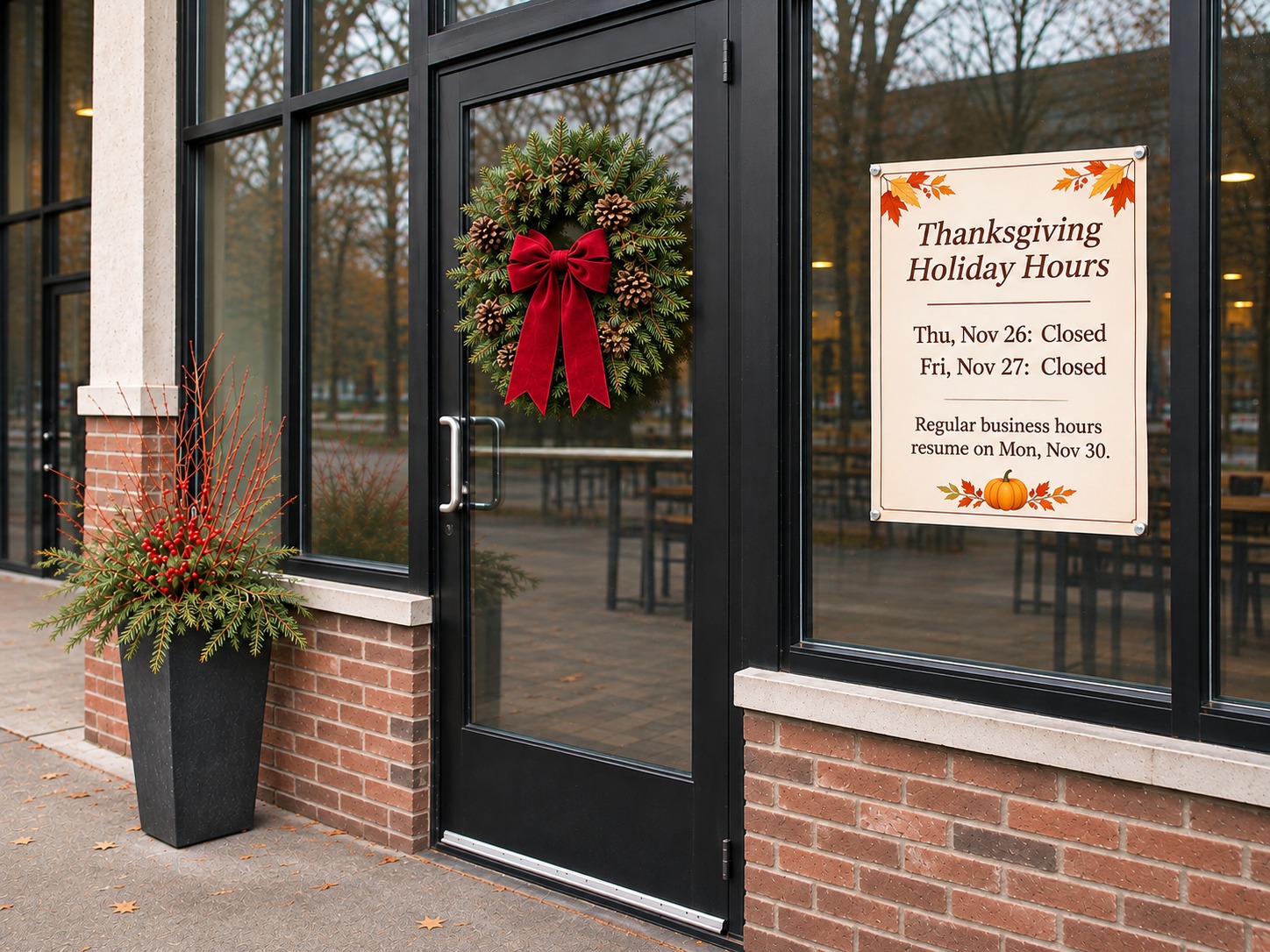
Business manager reviewing holiday operating hours before Thanksgiving

Commercial Thermostat Settings for Thanksgiving Closures

By Uncategorized
Commercial thermostat settings deserve a place on your Thanksgiving closing checklist. You may have updated the phone greeting, customer emails, and front-door sign. The heating schedule may still be following a normal workweek.

Before the business closes, confirm how the building should operate during the break. Some spaces will be empty. Others may still have cleaners, deliveries, staff, or temperature-sensitive contents.

For businesses in Park Ridge and Chicagoland, the goal is a planned operating schedule that fits the actual closure. It should also allow the building to be ready when people return.

Commercial Thermostat Settings Start With Actual Hours

Begin with the calendar rather than a temperature. When will the last person leave, and when will anyone next enter the building?

Thanksgiving may mean a single day off, a long weekend, or reduced hours. A business that opens early on Friday has a different schedule from an office that returns Monday.

Trane’s winter facility guidance recommends using scheduling to reflect holiday occupancy. The practical task is making sure the programmed hours match your business.

Confirm plans with the people who actually use the space. An assumed closure can overlook a team member preparing for the next opening day.

Find Out Which Controls Set The Schedule

A wall thermostat may not be the only control involved. Depending on the building, a central system, zone controller, or management platform may determine operation.

Ask who has authority to make changes and which settings apply to your space. If you lease the building, coordinate with the property manager before adjusting shared systems.

Also confirm whether a temporary override is active. Otherwise, an intended holiday schedule may not operate as expected.

Trane’s commercial thermostat overview describes scheduling for occupied and unoccupied periods. Your controls may use different labels, so follow the instructions for the installed system.

Account For The Building During The Closure

An empty building still has conditions that matter. Plumbing, equipment, stored materials, and adjoining spaces may affect the appropriate heating plan.

Therefore, do not turn off the heat or copy a setback temperature from another business without checking suitability. A building-specific recommendation is more useful than a universal number.

Tell your HVAC professional about areas that must remain within a particular range. Include any requirements supplied by equipment manufacturers, building management, or your operations team.

The appropriate minimum temperature depends on the property and its uses. Ask for a recommendation that accounts for those conditions rather than assuming every commercial space has the same needs.

Plan For The People Who Still Come In

Cleaning crews, security staff, deliveries, and managers may need access during the closure. Ask when they will arrive and which areas they will use.

For example, a team preparing for Friday sales may enter before the public opening time. A normal holiday setback might not suit that work period.

Build those exceptions into the plan instead of relying on someone to find and change the controls at the last minute. Also explain how authorized staff should request an adjustment.

Clear communication keeps one person’s temporary change from becoming an unexplained setting that remains after the holiday.

Remember That Ventilation Has Its Own Purpose

Heating and ventilation are related, but they are not interchangeable. A temperature setting does not establish whether an occupied space receives the ventilation it needs.

Do not disable ventilation or safety functions simply to reduce holiday operation. Ask a qualified professional how the controls should handle each scheduled use.

If part of the building remains occupied, explain that clearly. Shared equipment may serve areas with different needs.

A controls review can help identify appropriate changes and the settings that should remain under professional management. Give the service team the full operating schedule, including brief access periods.

Give Reopening Its Own Schedule

A holiday plan should end with the building ready for people to return. Do not focus only on the hour the business closes.

Ask how much recovery time the space needs under expected conditions. Some control systems can manage warm-up; others require a schedule set by an authorized operator.

Avoid guessing that the regular start time will suit every setback. Instead, review the equipment instructions and the building’s past performance with your service team.

Also identify who will notice if conditions are not right on reopening day. A clear contact prevents the first employees from having to improvise a response.

Use A Short Handoff Checklist

Before leaving, record the planned change and assign one person to verify it.

Include:

  • Closure and reopening dates.
  • Any staff or contractor access periods.
  • The approved heating schedule.
  • Areas with special operating needs.
  • The person responsible for restoring normal settings.
  • The contact for a heating problem.

If monitoring or alerts are already available, confirm that the designated person can receive them. Do not assume a feature is active because the equipment supports it.

Keep the note with your service records. Our property management HVAC guide explains the value of a consistent approach across buildings.

Common Questions About Holiday Heating Schedules

  • Should Every Thermostat Use The Same Setting?Not necessarily. Separate zones can serve different spaces and needs. Ask which controls should change together and which require individual attention.
  • Can We Simply Switch The System Off?Do not assume that is appropriate. Building protection, contents, occupants, and equipment requirements can make a shutdown unsuitable. Get guidance for the actual property.
  • What If We Do Not Know How The Schedule Works?Arrange a controls review before the closure. Ask for a clear explanation of the approved settings and how normal operation resumes afterward.

Close With A Plan And Reopen With Comfortable Space

Commercial thermostat settings should follow your holiday operations as carefully as the hours posted on the door. A clear plan removes last-minute guesswork.

Blue Collar Mechanical provides commercial HVAC service in Park Ridge and throughout Chicagoland. Schedule a controls and heating review or call (312) 577-7014. Address schedule and comfort problems before the Thanksgiving closure leaves nobody on site to notice them.
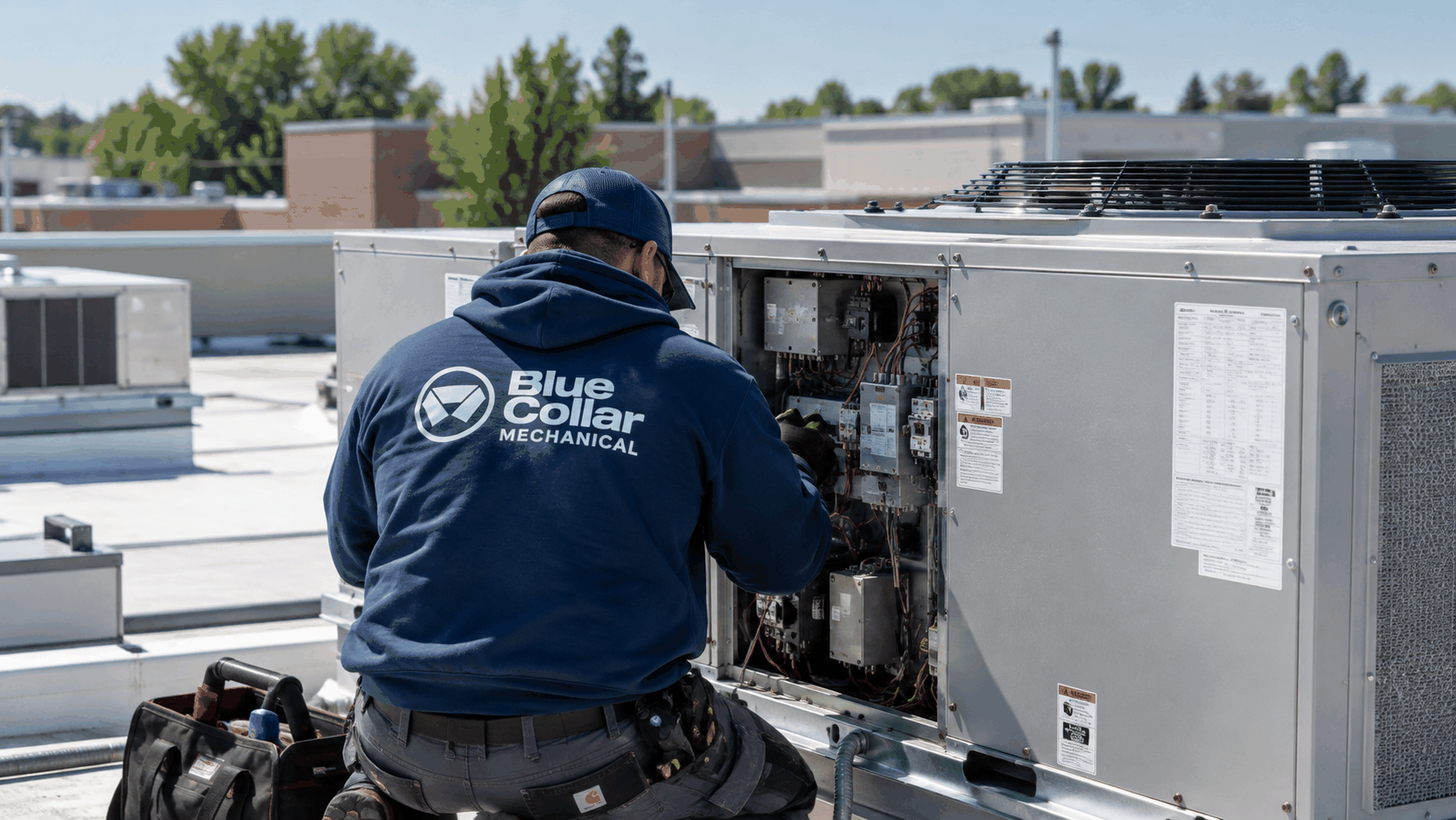
Commercial rooftop HVAC equipment serving a Chicagoland business

Commercial Rooftop Unit Not Heating? Get Ahead Of Cold Offices And Customer Complaints

By Uncategorized

A rooftop unit not heating your business can turn an ordinary October morning into a string of interruptions. Employees ask about the temperature. Customers keep their jackets on. Meanwhile, someone keeps changing the thermostat without knowing whether it helps.

The problem may involve controls, airflow, or the heating equipment itself. A running fan does not confirm that the unit is producing heat. Therefore, the next step should be a clear diagnosis rather than another round of adjustments.

For businesses in Park Ridge and Chicagoland, addressing the issue now can help avoid carrying an unresolved problem into colder weather.

Rooftop Unit Not Heating: Start With The Pattern

First, identify the area affected. Is the whole business cold, or does the complaint come from one office, storefront section, or tenant space?

Next, note when the problem happens. A space that warms up late every morning presents a different pattern from one that stays cold all day.

Write down a few details before calling:

  • The room temperature and requested setting.
  • Which rooms or zones feel cold.
  • Whether air is moving from the vents.
  • When someone first noticed the issue.
  • Any recent schedule, layout, or control changes.

These observations will not identify a failed component. However, they help the technician understand the complaint and plan the visit.

Check The Schedule Before Replacing The Thermostat

Commercial heating often follows an occupancy schedule. An incorrect setting can leave a building operating as though nobody is there.

If you are authorized to use the controls, check the displayed mode, temperature, time, and schedule. Also look for a holiday setting or temporary override that no longer matches the building’s hours.

For example, a business may open earlier during fall without changing its heating schedule. In that case, the complaint deserves a controls review before anyone assumes the rooftop equipment has failed.

Do not change advanced settings or installer menus to experiment. Instead, record what the screen shows and share it with the service team.

Why A Running Unit May Still Deliver No Heat

A rooftop system has several jobs, and fan operation is only one of them. The exact heating sequence depends on its model and configuration.

For example, Trane’s technical guidance for certain commercial units describes required heating commands, fan communication, ignition checks, and safety conditions. If the sequence cannot complete, the unit may not heat normally.

This is why a single symptom does not justify a single guessed repair. A technician needs to follow the appropriate equipment instructions and confirm where operation breaks down.

Leave rooftop access, electrical testing, and gas-system work to qualified professionals. Building staff can provide observations without opening equipment or attempting repairs.

Consider Airflow And Building Conditions Too

When one area is uncomfortable, the equipment may not be the only thing worth investigating. Ask whether the problem involves air delivery, zoning, or changes inside the space.

For instance, a recent office renovation may have changed where people work and where air needs to go. A thermostat may now sit in a different environment from the employees reporting the problem.

Trane’s overview of zoned rooftop systems explains how heating, cooling, and ventilation can serve multiple zones. Your building’s setup determines what a technician should evaluate.

Share any layout changes, even if they seemed unrelated to HVAC. That information can help frame the assessment.

Make The Service Visit Easier To Coordinate

A rooftop unit not heating should not require several people to reconstruct the same story. Choose one contact who can explain the complaint and authorize the next step.

Before the appointment, gather service records and equipment details if you already have them. You do not need to climb onto the roof to collect a model number.

Also confirm:

  • Who can provide approved roof or mechanical-area access.
  • Whether the landlord needs to authorize work.
  • Which business hours create access restrictions.
  • Who will receive the findings and estimate.
  • Whether more than one tenant reports the problem.

Clear coordination helps the visit stay focused on the equipment. It also reduces confusion about what the technician has permission to do.

What A Useful Repair Recommendation Should Explain

Ask for a description of the fault and the evidence behind it. You should understand what the proposed repair addresses and what remains uncertain.

For example, a recommendation should distinguish a confirmed component failure from a problem that needs further testing. It should also explain the next step if parts must be ordered.

Before approving work, ask how normal heating operation will be checked afterward. A unit starting once is not the same as confirming that it serves the affected space properly.

Our guide to commercial HVAC maintenance for facility managers covers the value of keeping useful service records. After this repair, retain the findings so future decisions have a clear starting point.

Common Questions From Business Owners

  • Does no heat mean the rooftop unit needs replacement?No. A rooftop unit not heating may have a repairable problem. Equipment condition, the confirmed fault, and repair history should guide the decision.
  • Should employees keep resetting the unit?No. Repeated resets are not a diagnosis. Share any previous resets with the technician, then follow the service team’s instructions.
  • What if staff smell gas or a carbon monoxide alarm sounds?Evacuate immediately and call 911 or the gas utility from a safe location. Do not wait for a routine appointment. Nicor Gas provides emergency guidance for suspected gas leaks and carbon monoxide concerns.

Stop Letting Heating Problems Interrupt The Business

An unresolved heating complaint keeps taking time away from the work your team needs to do. Changing the thermostat again is not a plan.

Blue Collar Mechanical provides commercial HVAC service in Park Ridge and throughout Chicagoland. A rooftop unit not heating properly needs attention before colder days increase the disruption.

Schedule commercial heating service or call (800) 804-6546. Give your team a clear next step and your building the attention it needs.