

A rooftop unit not heating your business can turn an ordinary October morning into a string of interruptions. Employees ask about the temperature. Customers keep their jackets on. Meanwhile, someone keeps changing the thermostat without knowing whether it helps.
The problem may involve controls, airflow, or the heating equipment itself. A running fan does not confirm that the unit is producing heat. Therefore, the next step should be a clear diagnosis rather than another round of adjustments.
For businesses in Park Ridge and Chicagoland, addressing the issue now can help avoid carrying an unresolved problem into colder weather.
Rooftop Unit Not Heating: Start With The Pattern
First, identify the area affected. Is the whole business cold, or does the complaint come from one office, storefront section, or tenant space?
Next, note when the problem happens. A space that warms up late every morning presents a different pattern from one that stays cold all day.
Write down a few details before calling:
- The room temperature and requested setting.
- Which rooms or zones feel cold.
- Whether air is moving from the vents.
- When someone first noticed the issue.
- Any recent schedule, layout, or control changes.
These observations will not identify a failed component. However, they help the technician understand the complaint and plan the visit.
Check The Schedule Before Replacing The Thermostat
Commercial heating often follows an occupancy schedule. An incorrect setting can leave a building operating as though nobody is there.
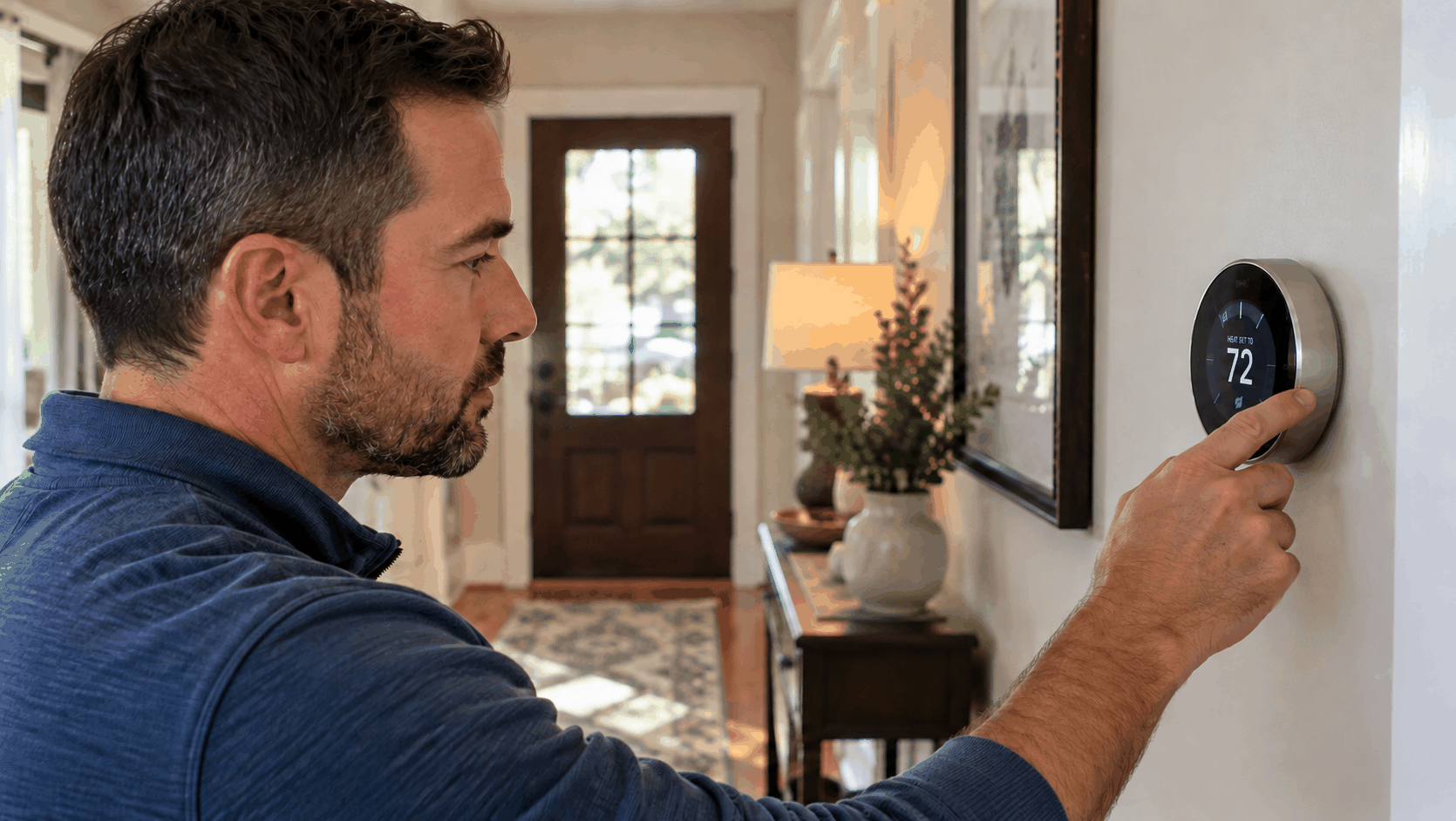
If you are authorized to use the controls, check the displayed mode, temperature, time, and schedule. Also look for a holiday setting or temporary override that no longer matches the building’s hours.
For example, a business may open earlier during fall without changing its heating schedule. In that case, the complaint deserves a controls review before anyone assumes the rooftop equipment has failed.
Do not change advanced settings or installer menus to experiment. Instead, record what the screen shows and share it with the service team.
Why A Running Unit May Still Deliver No Heat
A rooftop system has several jobs, and fan operation is only one of them. The exact heating sequence depends on its model and configuration.
For example, Trane’s technical guidance for certain commercial units describes required heating commands, fan communication, ignition checks, and safety conditions. If the sequence cannot complete, the unit may not heat normally.
This is why a single symptom does not justify a single guessed repair. A technician needs to follow the appropriate equipment instructions and confirm where operation breaks down.
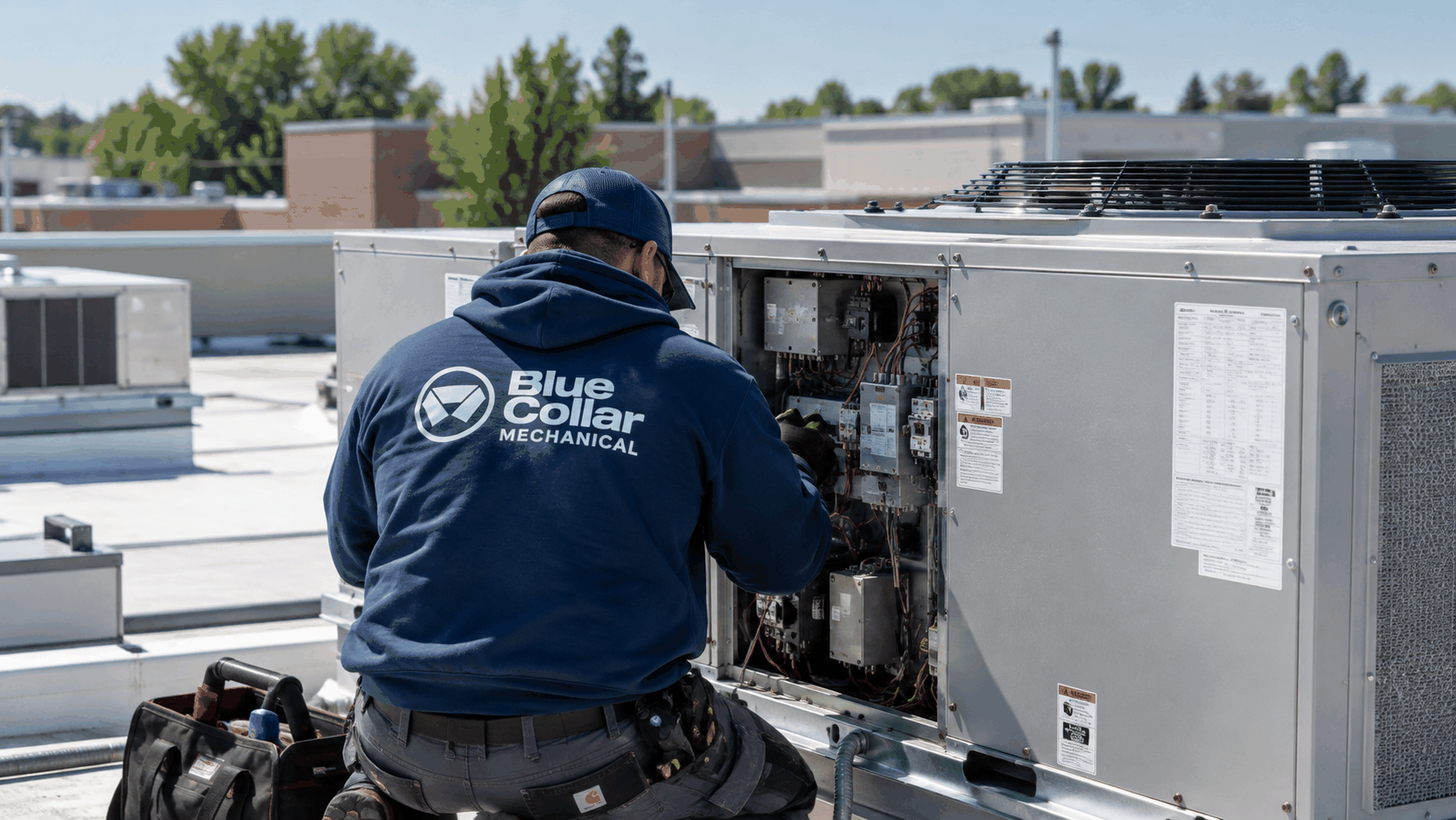
Leave rooftop access, electrical testing, and gas-system work to qualified professionals. Building staff can provide observations without opening equipment or attempting repairs.
Consider Airflow And Building Conditions Too
When one area is uncomfortable, the equipment may not be the only thing worth investigating. Ask whether the problem involves air delivery, zoning, or changes inside the space.
For instance, a recent office renovation may have changed where people work and where air needs to go. A thermostat may now sit in a different environment from the employees reporting the problem.
Trane’s overview of zoned rooftop systems explains how heating, cooling, and ventilation can serve multiple zones. Your building’s setup determines what a technician should evaluate.
Share any layout changes, even if they seemed unrelated to HVAC. That information can help frame the assessment.
Make The Service Visit Easier To Coordinate
A rooftop unit not heating should not require several people to reconstruct the same story. Choose one contact who can explain the complaint and authorize the next step.
Before the appointment, gather service records and equipment details if you already have them. You do not need to climb onto the roof to collect a model number.
Also confirm:
- Who can provide approved roof or mechanical-area access.
- Whether the landlord needs to authorize work.
- Which business hours create access restrictions.
- Who will receive the findings and estimate.
- Whether more than one tenant reports the problem.
Clear coordination helps the visit stay focused on the equipment. It also reduces confusion about what the technician has permission to do.
What A Useful Repair Recommendation Should Explain
Ask for a description of the fault and the evidence behind it. You should understand what the proposed repair addresses and what remains uncertain.
For example, a recommendation should distinguish a confirmed component failure from a problem that needs further testing. It should also explain the next step if parts must be ordered.
Before approving work, ask how normal heating operation will be checked afterward. A unit starting once is not the same as confirming that it serves the affected space properly.
Our guide to commercial HVAC maintenance for facility managers covers the value of keeping useful service records. After this repair, retain the findings so future decisions have a clear starting point.
Common Questions From Business Owners
- Does no heat mean the rooftop unit needs replacement?No. A rooftop unit not heating may have a repairable problem. Equipment condition, the confirmed fault, and repair history should guide the decision.
- Should employees keep resetting the unit?No. Repeated resets are not a diagnosis. Share any previous resets with the technician, then follow the service team’s instructions.
- What if staff smell gas or a carbon monoxide alarm sounds?Evacuate immediately and call 911 or the gas utility from a safe location. Do not wait for a routine appointment. Nicor Gas provides emergency guidance for suspected gas leaks and carbon monoxide concerns.
Stop Letting Heating Problems Interrupt The Business
An unresolved heating complaint keeps taking time away from the work your team needs to do. Changing the thermostat again is not a plan.
Blue Collar Mechanical provides commercial HVAC service in Park Ridge and throughout Chicagoland. A rooftop unit not heating properly needs attention before colder days increase the disruption.
Schedule commercial heating service or call (800) 804-6546. Give your team a clear next step and your building the attention it needs.